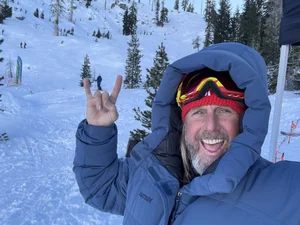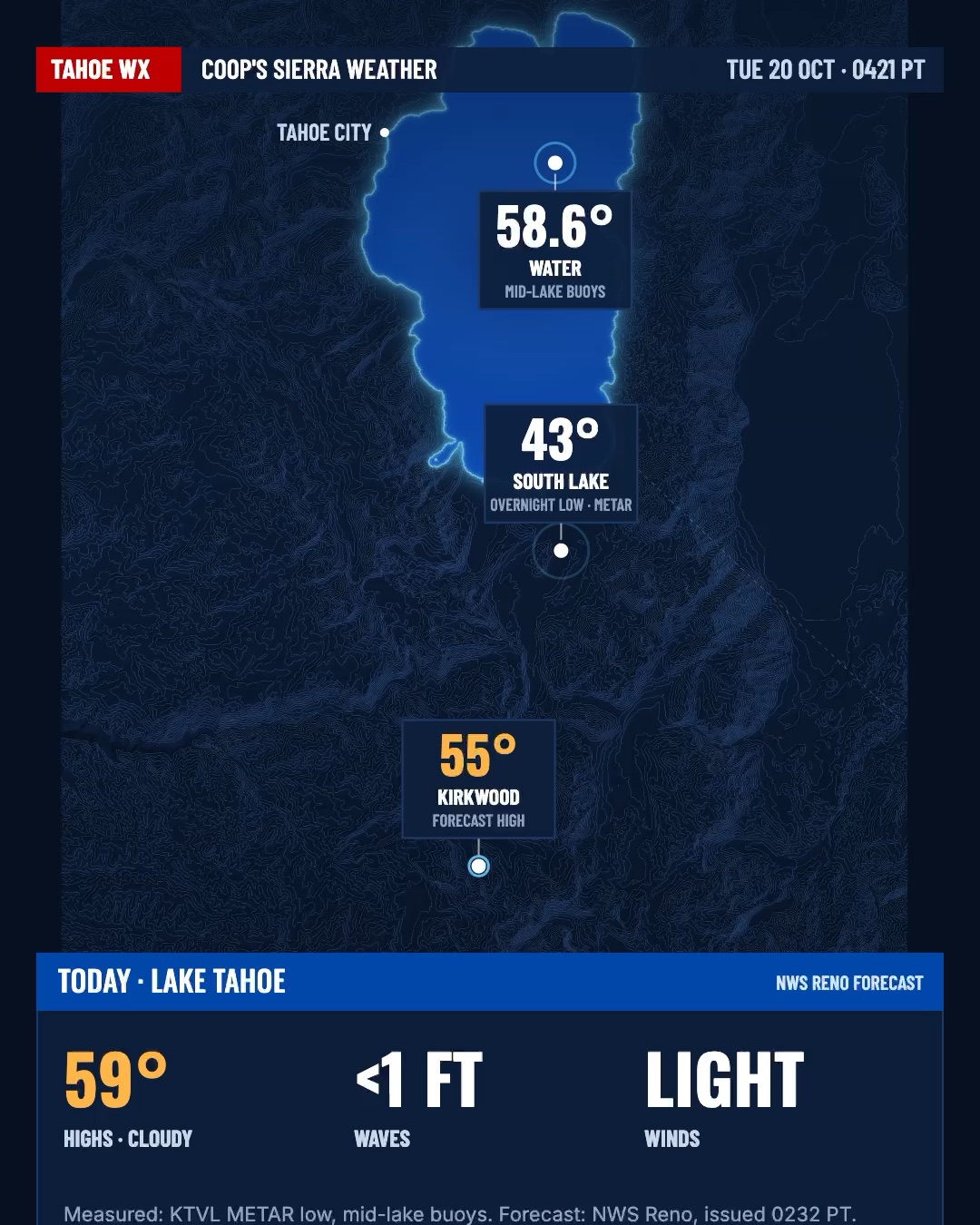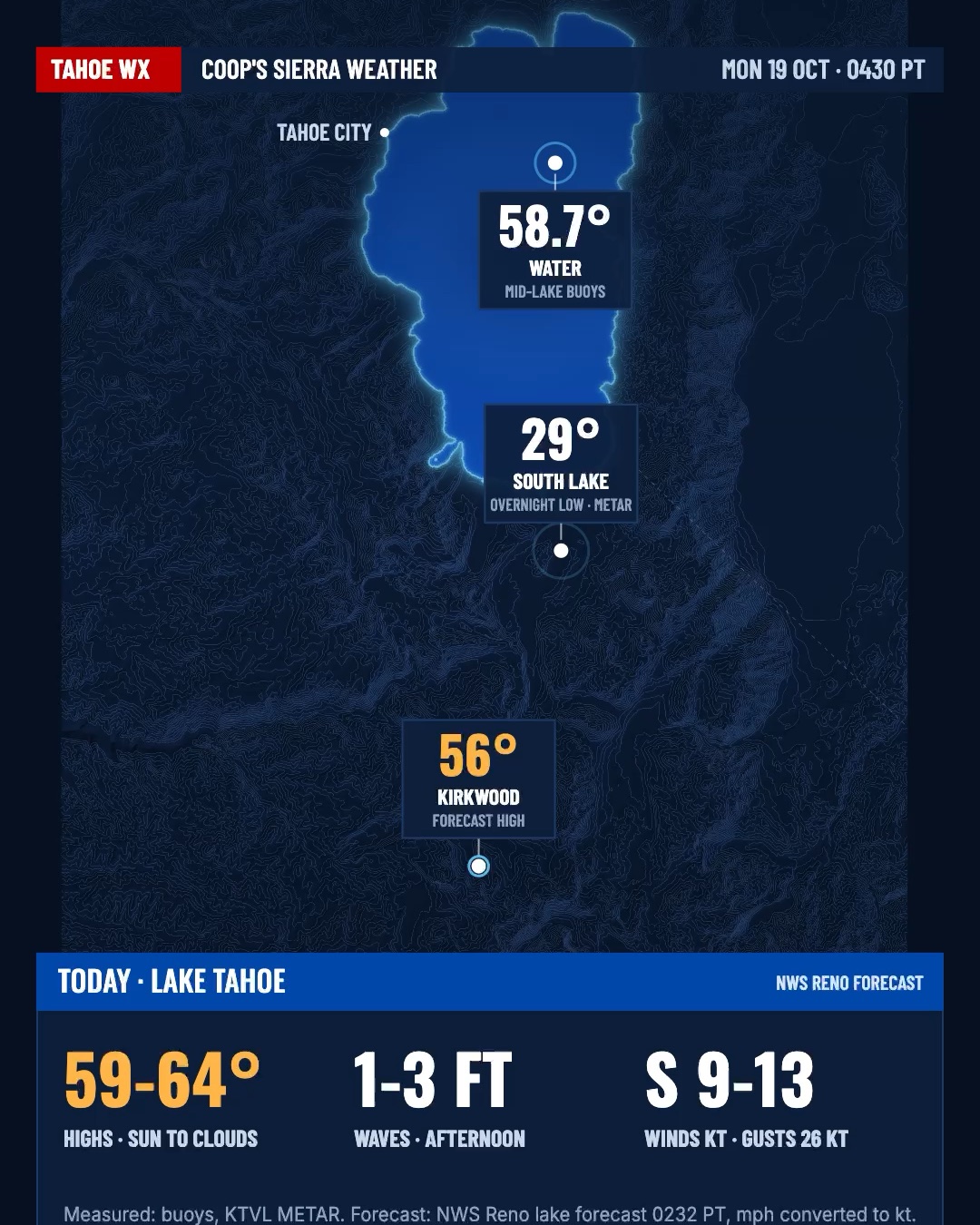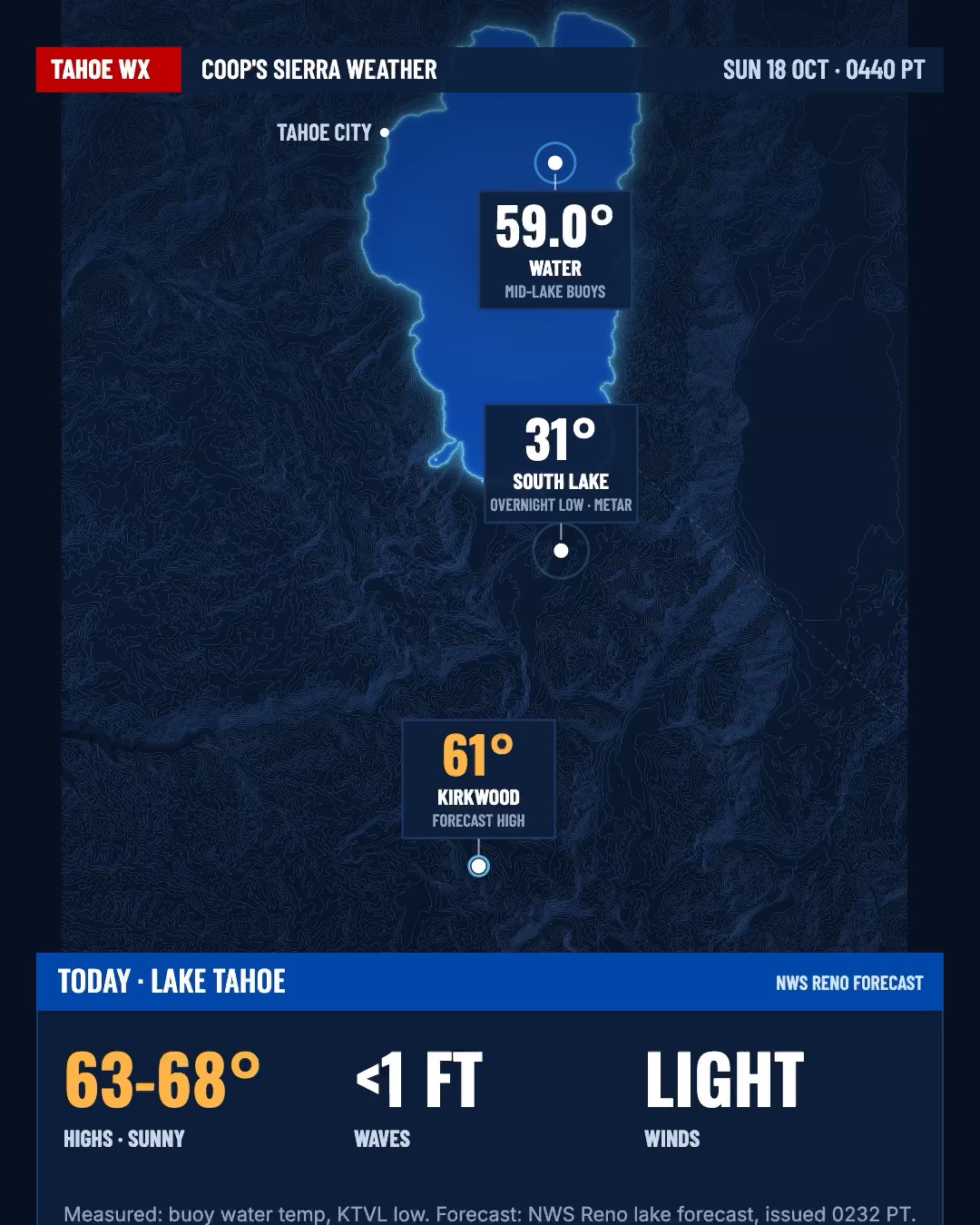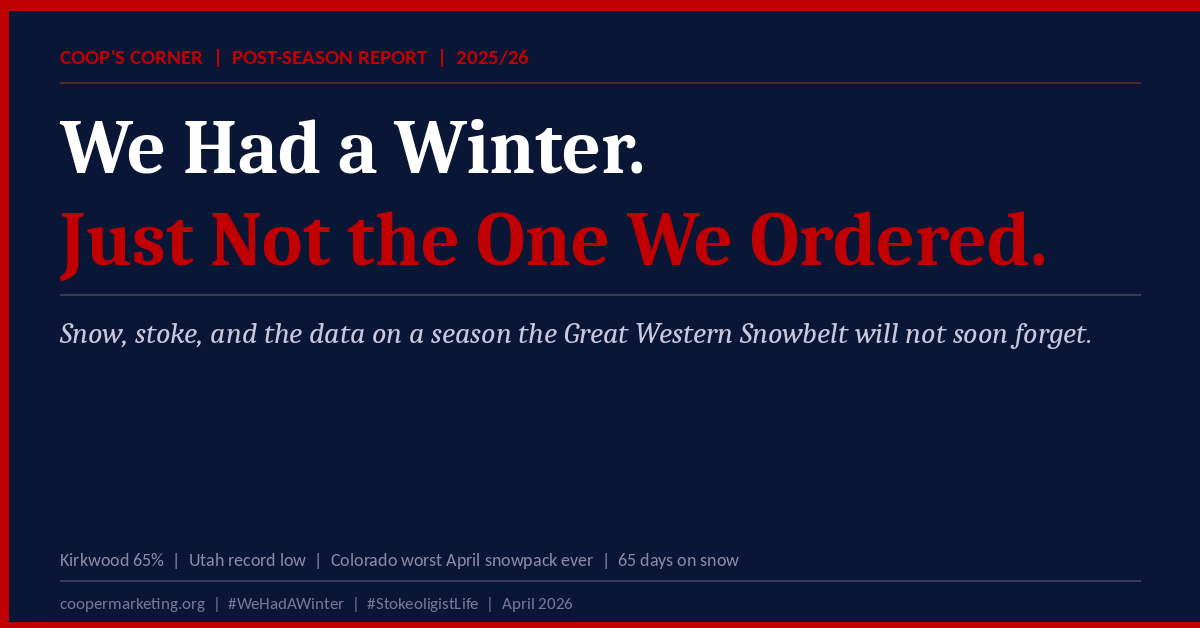
A post-mortem on the season the Great Western Snowbelt will not soon forget, the communities that carried it anyway, and the long view from someone who was out there for every one of his 65 personal days on snow.
Winter did not cancel. It just showed up on its own terms, which is the most honest thing a season can do. From opening day to closing day, from the first groomed corduroy run before the lifts were fully spinning to the last grip-and-rip carver of the spring, I was in it. Sixty-five personal days on snow this season, across the mountains and resorts of the Sierra and beyond, watching this winter arrive late, leave early, and deliver something real in between. Not the season we wanted. The season we got. And in the mountain communities of the American West, there is an enormous difference between those two things, because one of them sends people home and the other one pays the mortgage.
Let me be clear before I open the ledger: I am a stokeologist by design and disposition. I do not do doom scrolling, I do not do powder-or-nothing, and I have never once left a mountain unhappy unless I forgot my lunch. From the HippieHaus office: 65 days on snow, 15 comps called, 4 genuine POW days, and more grip-and-rip, carvilicious, bluebird-after-storm moments than a single season deserves. There was a winter in 2025/26. There was joy in it. There were people who showed up, built it, and ran it with everything they had. This piece is for them, too. But it also carries the data. And the data is uncomfortable.
FIRST, THE TAHOE CALENDAR TRUTH
THE SIERRA RUNS ON ITS OWN CLOCK. ALWAYS HAS.
Thanksgiving at Lake Tahoe is a blessing when it happens. It is not a promise, and it has never been a baseline. I have personally skied on man-made snow more Thanksgivings than on natural snow, and I have skipped the mountain on Thanksgiving entirely more times than I have ridden either. That is not a complaint.
That is the deal. #ColdSmokePow at Thanksgiving is a gift. Groomed corduroy is a perfectly acceptable thank-you note from the Sierra.
Tahoe’s real season starts around Christmas and runs through the end of April when the calendar cooperates. The December hand-wringing that plays out on social media every year, the “no snow in Tahoe” posts from people who booked Thanksgiving week and found machine-made conditions instead of cold smoke, that is not a Tahoe story. That is a Rocky Mountain expectation applied to a Sierra Nevada mountain. The Sierra runs on its own clock. It always has. The question for 2025/26 was not whether Thanksgiving delivered. The question was whether Christmas did, and whether the season held through April. On both counts, Tahoe had an answer. Just not the answer anyone ordered.
THE BASIN WEATHER STORY | FROM THE INSIDE
I want to be clear about something before we zoom out to the broader Western picture. I know Colorado's winter the way I know about it from data and from talking to people who were there. I know Tahoe's winter the way I know my own address. I have been calling snow, weather, and stoke in this Basin since 1992, which is long enough to know the difference between a cold snap and a pattern, and between a rough week and a broken season. I have been through every one of the storms and every one of the gaps that defined this season, and what happened here in 2025/26 is its own story inside the larger western story. It deserves to be told with precision.
Precipitation came in November. That is the first thing to know. This was not a dry start in the way some bad Tahoe seasons begin. The storms showed up. But the rain/snow line parked itself around 9,000 feet, meaning the lower mountain was catching rain, and the upper mountain was the only place catching snow. Mt. Rose, sitting at the highest base elevation in the Basin, and Heavenly barely opened. Palisades targeted November 26 as opening day. That plan met the reality of a warm atmospheric river delivering water, not winter, to the lower and mid elevations. A blessing when it snows at Thanksgiving in Tahoe. A reminder when the rain/snow line is above your mid-mountain.
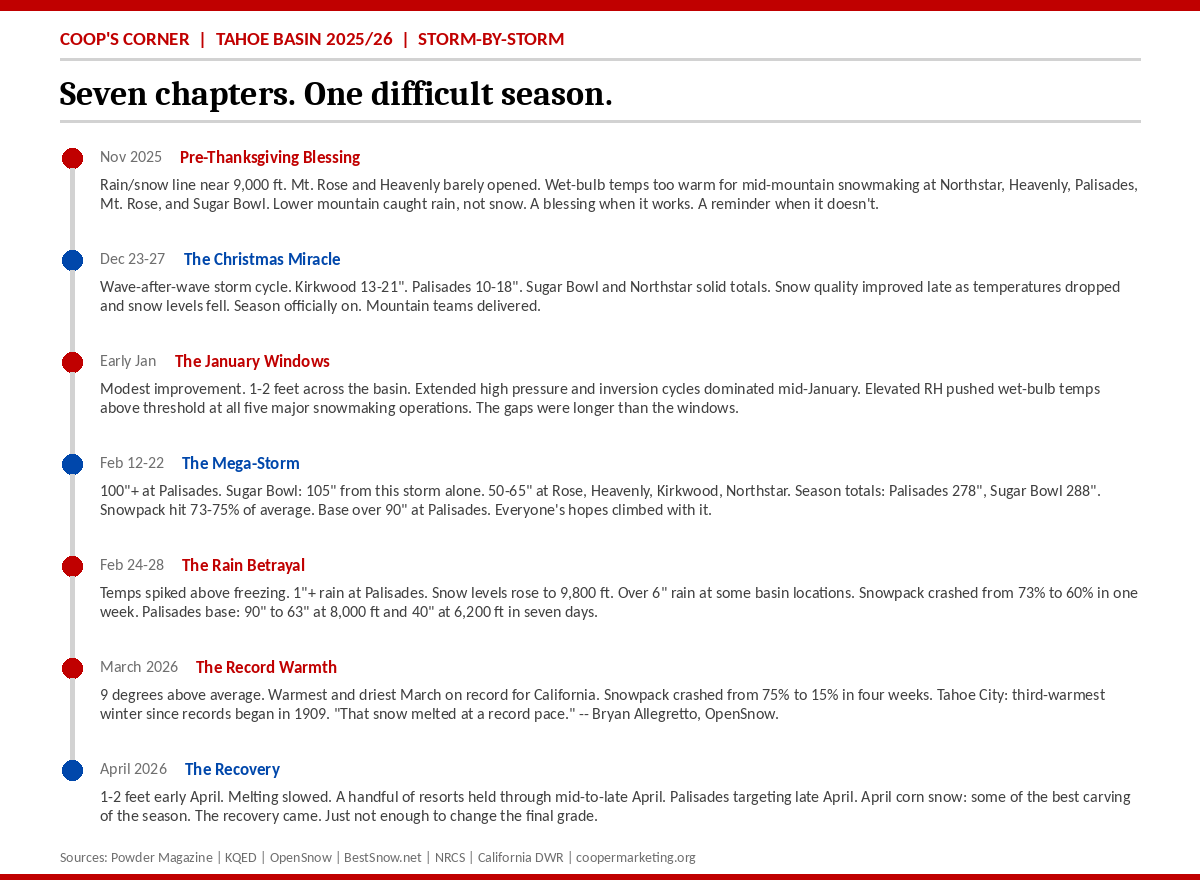
Then, December 23 through 27 arrived, and the Sierra did what the Sierra can do. A multi-day storm cycle ran wave after wave through the holiday week. KirkwoodMtn picked up 13 to 21 inches across the best windows. Palisades, Northstar, Heavenly, and Sugar Bowl stacked meaningful totals. The snow quality on the back half of the cycle was legitimate as temperatures cooled and snow levels dropped. The Christmas Miracle was real. It did not build a season-defining base. But it opened terrain, filled lodges, put the Basin on the board, and gave mountain teams something to work with through January. That matters.
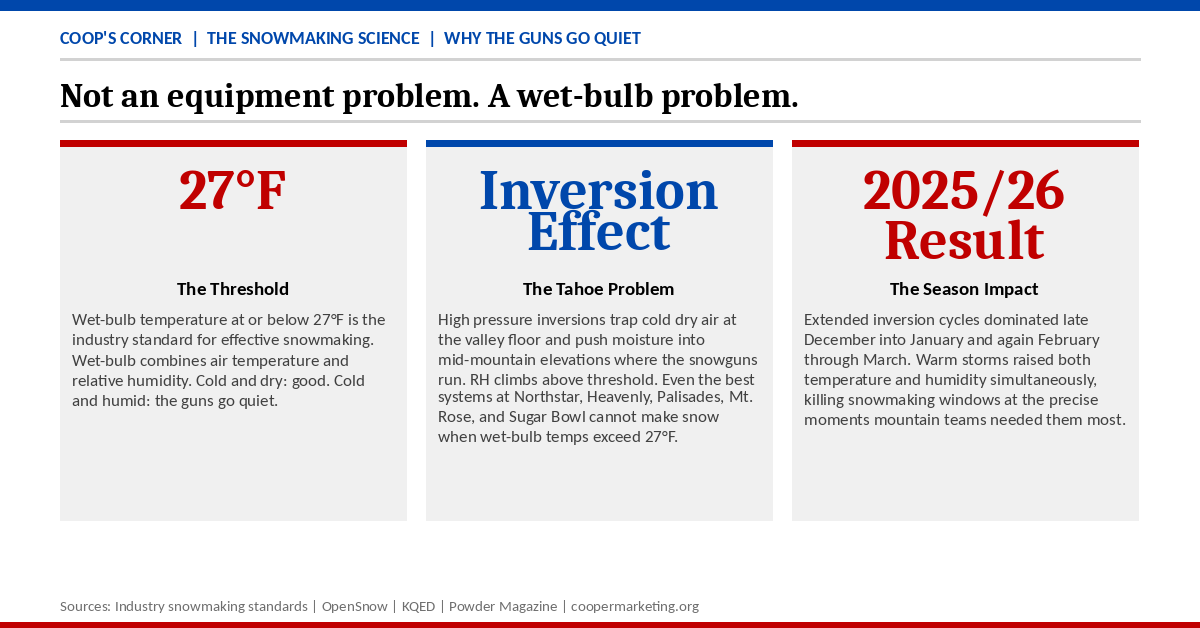
Here is what the general ski media does not spend enough time on when covering a lean Tahoe year. It is not just the absence of storms. It is the character of the periods between them. This season was defined by extended high-pressure ridges that settled over the Great Basin and refused to move. Cold temperatures with an air inversion, cold air pooling at the valley floor, and relatively warmer air above it meant the Basin felt like winter in temperature but behaved like early fall in snowpack buildup. No precipitation. Dry cold. The kind of setup that looks like snowmaking weather from the outside, but often is not. And here is the detail that separates a Tahoe local's read from a general forecast: snowmaking does not run on air temperature alone. It runs on wet-bulb temperature, the combined reading of air temperature and relative humidity that determines whether a water droplet will freeze before it hits the ground. The industry standard threshold is roughly 27 degrees Fahrenheit wet-bulb or colder. High-pressure inversion cycles in the Basin run cold and dry at the valley floor but push moisture and relatively warmer air into the mid-mountain elevations where the snowguns are stationed. Northstar, Heavenly, Palisades Tahoe, Mt. Rose, and Sugar Bowl operate some of the most advanced snowmaking systems in the western United States. Those systems are not limited by equipment. They are limited by wet-bulb temperatures. In a clean, cold-and-dry, high-pressure setup, those systems run at full capacity through the night and build a base. In an inversion cycle with elevated relative humidity in the critical elevation band, the wet-bulb temperature climbs above threshold, the guns go quiet, and the crews wait. This season had more of the second kind of high pressure than the first. Those gaps stretched for weeks at a time in late December into January, and again in the back half of February into March. You can stand in this Basin and watch a stunning Sierra bluebird sky while the snowpack underneath you is stagnating or sublimating. That is a very particular kind of weather psychology that Tahoe locals understand, and visitors rarely do.
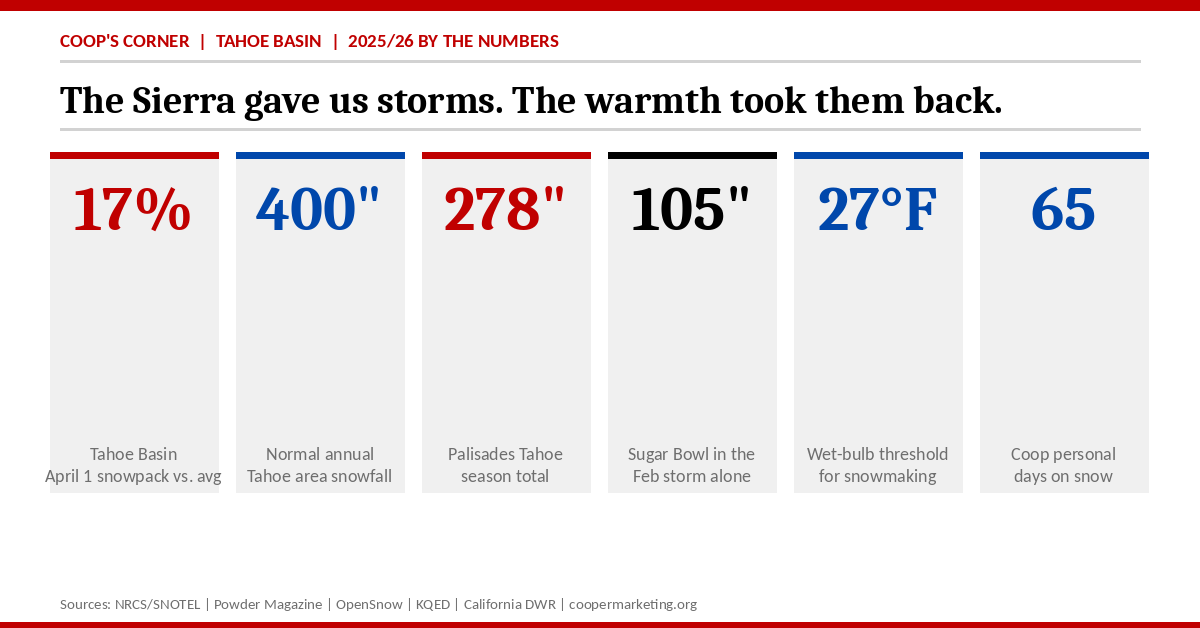
The mid-February storm was as real as any storm Tahoe has seen in years. Palisades Tahoe ended up with a storm total of more than 100 inches. Mt. Rose, Heavenly, KirkwoodMtn, and Northstar all received between 50 and 65 inches. In the Eastern Sierra, MammothMtn got at least 63 inches. Sugar Bowl reported 105 inches from this storm alone, bringing its season-to-date total to 288 inches. Palisades was measuring 278 inches for the season. Against a normal-year average of roughly 400 inches, those numbers showed a season that had significantly caught up. California’s statewide snowpack briefly hit 73% of its seasonal average. Palisades reported a base depth of over 90 inches at the peak of the storm.
Then February 24 arrived. Temperatures spiked above freezing. An inch of rain fell at Palisades during the day, followed by another 1.16 inches that night. Snow levels rose to 9,800 feet. Some parts of the region reported over six inches of rain in the days following. The base, which had been over 90 inches, dropped to 63 inches at 8,000 feet and to 40 inches at 6,200 feet by March 3. In one week, California’s snowpack dropped from 73% back to 60% of its average, almost erasing every inch the mega-storm had delivered. Not a lack of precipitation. A precipitation delivery problem. Rain where there needed to be snow. Then March arrived, ran 9 degrees above average for the full month, and the collapse accelerated beyond anything the February storm had built.
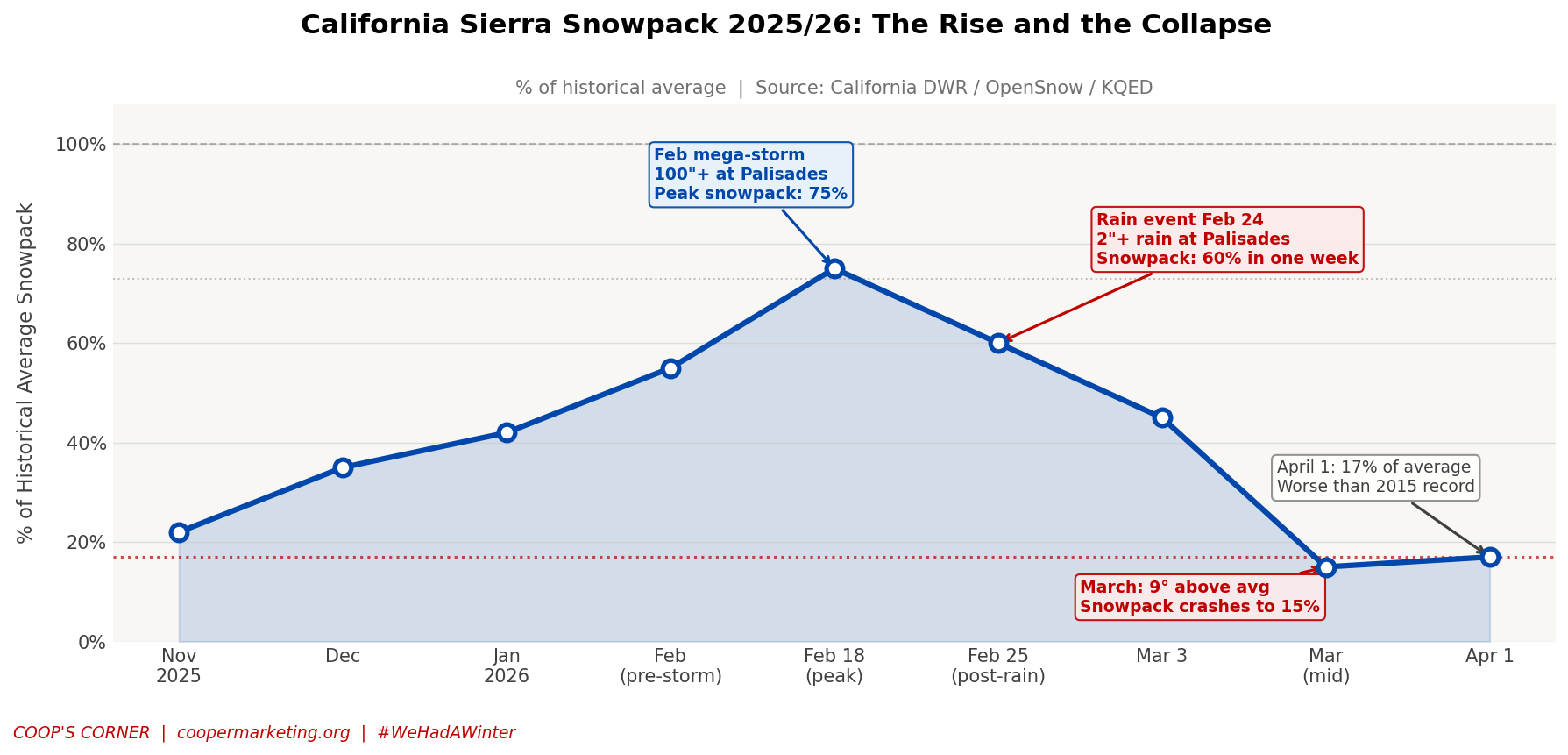
“That snow has melted at a record pace here in the month of March. The snowpack, which peaked at 75% of average just four weeks ago, has crashed down to 15%. We’ve lost 60% of the median in just four weeks.” – Bryan Allegretto, California Forecaster, OpenSnow, March 2026
March sealed it. Temperatures ran 9 degrees above average across the Sierra. The full three-month winter period was record warm throughout a majority of the Sierra Nevada, according to climate scientist Daniel Swain of UC Agriculture and Natural Resources. He described Tahoe’s warm temperatures as “truly snow-eating.” Tahoe City recorded its third-warmest winter since records began in 1909. By April 1, the Tahoe Basin snowpack sat at 17% of average. Even the notoriously bad 2015 season had more snow on that date.
This is the rain-versus-snow accounting that matters most. Tahoe City averages roughly 27 to 31 inches of total annual precipitation. This was not a dry year in terms of total precipitation arriving at the Basin. It was a warm year. A disproportionate share of what arrived fell as rain, particularly at the critical junctures: the November rain/snow line elevated above base elevations, the February follow-on rain event hitting immediately after the biggest snowfall of the season, and the March warmth running at record levels. What California’s snowpack needs is not just precipitation. It needs cold precipitation, arriving at the right elevation, at the right time, and staying cold long enough to consolidate into the base the Sierra relies on to carry a water year. In 2025/26, the Basin received the water. It just received too much of it in the wrong phase.
April did what it occasionally does. Cold returned, a storm materialized in the first week, and the pace of melting slowed. A handful of Tahoe resorts held through mid-to-late April. Palisades, originally hoping for Memorial Day, targeted late April. Some of the best days of this season came in that final window, with corn snow that earns its own category in a compressed late season. The recovery came. It just came too late and landed on too thin a foundation to change the season’s final grade.
THE SNOWPACK THAT WASN’T | THE BROADER WESTERN PICTURE
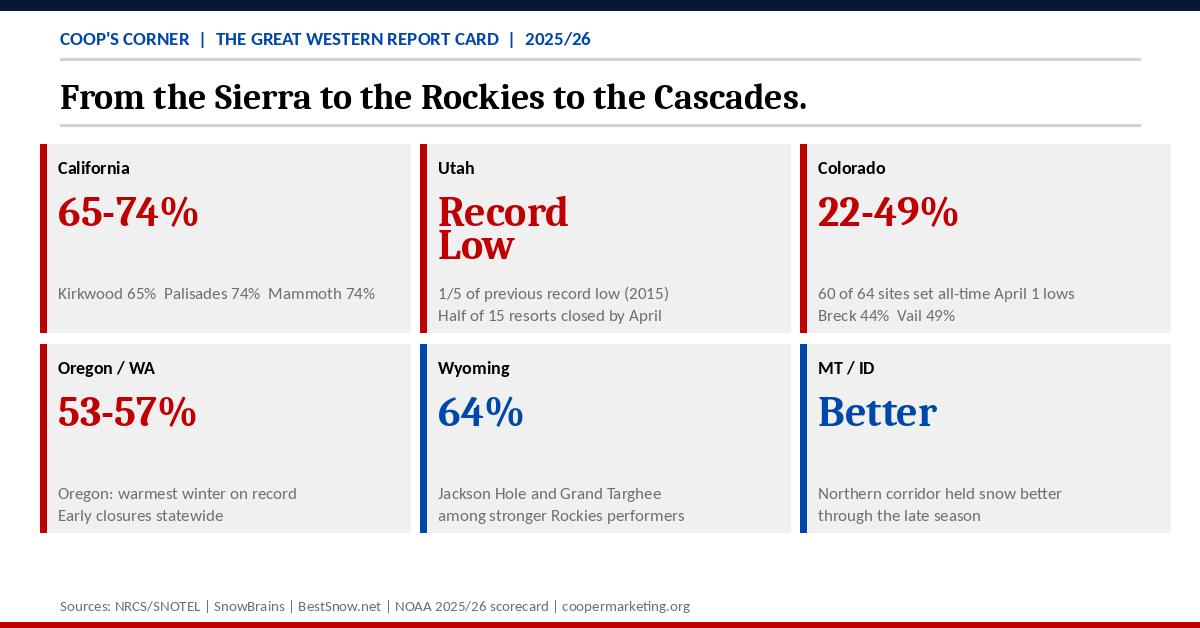
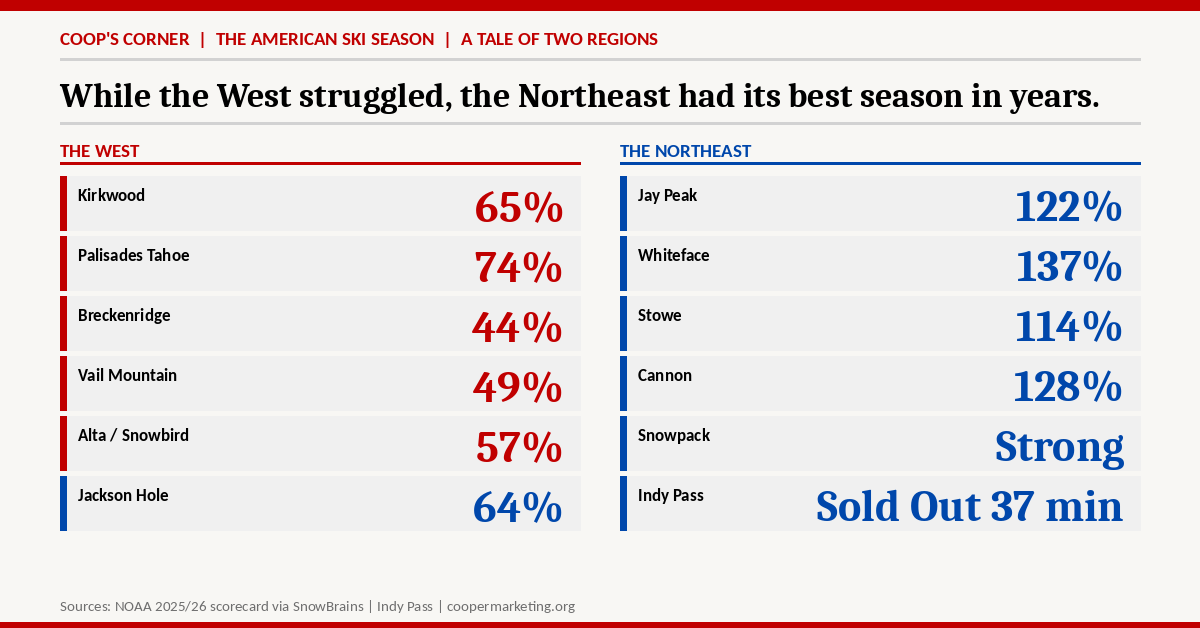
What happened in Tahoe did not happen in isolation. Across the mountain West, 2025/26 was a season defined by the same forces at different scales. California finished with KirkwoodMtn at 65% of normal snowfall, Palisades at 74%, and MammothMtn at 74%. Southern California came in at 43%. The April 1 statewide snowpack stood at 18% of average, the second lowest on record, after California’s March became its warmest and driest in recorded history.
Utah set an April 1 snowpack record so low it deserves two readings: the state’s snow water equivalent came in at roughly one-fifth of the previous record low. Not below average. One-fifth of the previous worst year on record, which was 2015. Utah’s peak snowpack hit 8.3 inches on March 9 and peaked three weeks early. About half of Utah’s 15 resorts had closed by April. Colorado was a mirror: of 64 manual snow course sites with records stretching back 50 or more years, 60 either tied or set their lowest-ever April 1 readings. Breckenridge finished at 44% of normal snowfall. Vail at 49%. Loveland closed April 26, its earliest in 45 years outside the pandemic. Oregon tied its record for the warmest winter ever. Washington’s snowpack sat at 53% of the median. Wyoming’s Jackson Hole and Grand Targhee finished at 64%, among the stronger performers in the Rockies, which tells you something about how the rest of the mountain West finished.
HAS THIS HAPPENED BEFORE? YES. NOT LIKE THIS.
The Mountain West has seen low-snow years before. The 2011/12 season was hard for Colorado. The 2014/15 season hit California badly, and the downstream drought produced more than $1 billion in agricultural losses across the Pacific Northwest. The 1976/77 season pushed resorts to invest in snowmaking at scale for the first time, which is why the guns we rely on today exist at all. In 1934, during the Dust Bowl, Utah recorded what was then its worst snowpack year. Those are the comps. What makes 2025/26 different is the simultaneity. The 2015 drought hammered California, but the Rockies were functional. 2012 was rough in Colorado, but California held together. Finding a year when damage occurred simultaneously across the Sierra, the Wasatch, the Cascades, and the ranges of Oregon and Wyoming at this scale requires going further back than the modern era of daily snowpack monitoring, which began in 1930. We may be looking at something with no precise modern parallel across the full western footprint. That is not editorial hyperbole. That is what the SNOTEL data is showing.
“These are not unusual conditions anymore. They are the new baseline we are being asked to plan around.” – Jordan Clayton, Hydrologist, USDA Natural Resources Conservation Service, March 2026
WHAT IT COSTS. EVERYWHERE.
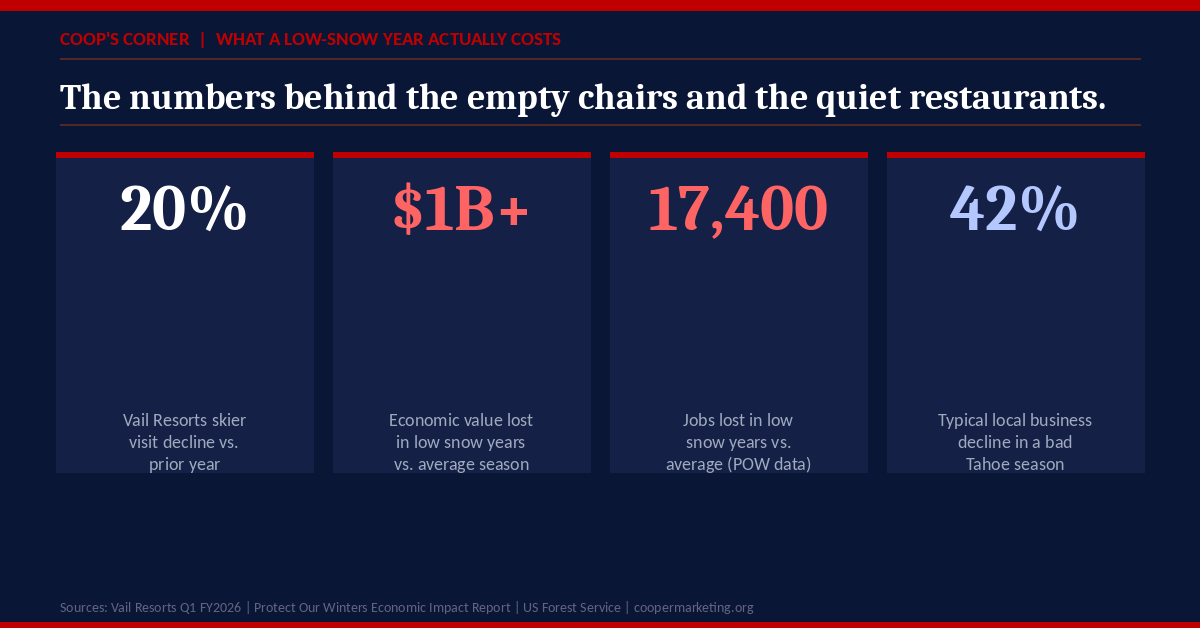
Vail Resorts, the largest mountain resort operator in North America, reported a 20% decline in skier visits season-to-date through early January compared to the prior year. Ski school revenue was down 14.9%. Dining revenue was down 15.9%. Retail and rental was down 6%. Their Rocky Mountain locations opened just 11% of terrain in December. That 20% decline in visits does not live only on a resort’s income statement. It radiates outward. A skier who does not come to the mountain does not eat at the restaurant, does not rent from the gear shop, does not stay at the hotel, does not fill up at the gas station, does not buy groceries in town.
Protect Our Winters found that in low snow years, the industry loses more than $1 billion in economic value and 17,400 jobs compared to an average season. The US Forest Service estimates that downhill skiing generates between $2.16 and $4.39 billion annually in economic activity across national forests and supports 65,000 full or part-time jobs. California’s ski industry alone supports approximately 24,000 jobs and $1.4 billion in economic value. Colorado’s industry is valued at $5 billion a year. Standing in South Lake Tahoe, you do not need the national data to feel those numbers. You just need to count the tables at a restaurant that hired for winter and is running on a spring crew. Heavenly in California and Crested Butte in Colorado both posted occupancy declines of 21% despite rate increases. A bad Tahoe snow season has historically produced up to a 42% decrease in business for individual local stores. Staffing gets cut. Seasonal workers who depend on a full Christmas-to-April window find themselves looking for work in February. The restaurant that hired for a 100-day season ran 60.
THE PASS ECONOMY AND THE DAY SKIER GAP
Season pass revenue now outpaces day ticket sales for the first time since the two metrics began being tracked together. That means resort operators absorbed some of the visitation hit because pass revenue had already been collected in September and October. The lift line was shorter. The income statement still bled, but not as badly as the empty parking lot suggested. The day skier took the real hit. For Tahoe, the day skier and the drive-market visitor is the lifeblood of the towns that surround these mountains: the diner on Lake Tahoe Boulevard, the gear shop, the rental cabin booked for a long weekend, the après bar that runs on Thursday walk-ins. When those dollars do not arrive, they do not arrive on a delay. They simply do not arrive.
THE LOW TIDE. WHAT A COMPRESSED SEASON COSTS NORTH SHORE, SOUTH SHORE, AND THE WEST SHORE
The ski economy and the local economy are not two separate things in the Tahoe Basin. They are the same thing, wearing different clothes. According to the Tahoe Prosperity Center, more than 62% of all economic output in the Basin traces back directly to tourism, a figure that has grown, not shrunk, over the past decade. The Basin receives between 3 and 5 million visitors annually, generating roughly $2 billion in tourism revenue basin-wide. When the snow underperforms and the season compresses, that revenue does not simply shift. It disappears.
The North Shore and Truckee feel it first and feel it hardest. Tourism supports 9,070 jobs in the North Shore area alone, with accommodations and food services accounting for 4,817 of those positions. Truckee ran $245.7 million in total visitor spending in 2024, supported 1,670 tourism-related jobs, and generated $63.7 million in direct worker earnings. Those numbers were already trending flat heading into the 2025/26 season, with lodging revenue down 2.1% and retail spending effectively stalled. A compressed winter with an early close does not land on a resilient baseline. It lands on a labor market where 72% of positions in unincorporated Placer County are seasonal by nature. When the season shortens, those workers do not get part of a paycheck. They get none of it.
The South Shore carries its own version of the same weight. Housing costs and local wages were already far apart before this lean winter. The workforce that runs the restaurants, the rental shops, the hotels, and the lift operations is already stretched thin between wages that do not grow and housing costs that will not stop. A slow winter does not tighten margins for those workers. It eliminates them. The restaurant that hired a full winter crew in October and watched the Christmas storm arrive, the rain betrayal hit, and the March warmth erase the base did not run a lean quarter. It ran a scramble. The West Shore, anchored by lower-elevation resorts sitting directly at lake level, faced some of the sharpest terrain compression of the season. Homewood’s management said it plainly to KQED in March: “It is tense and tough for the people working in the industry and tough on the community.” That is the West Shore in one sentence. Every storm came just in time to rescue the base. Then the rain came and washed away almost all they had gained.
The Tahoe Prosperity Center has said directly that the Basin’s economy is “not healing itself, nor resilient to disruptive changes.” A low-snow winter is exactly the kind of disruptive change the data was describing. The workers who power this community are the same workers who cannot afford to live here, who commute from Reno or Carson City or South Valleys because the Basin has priced them out, and who absorb the financial hit of a compressed season with no cushion beneath them. That is the real low tide. Not the snowpack number. The people.
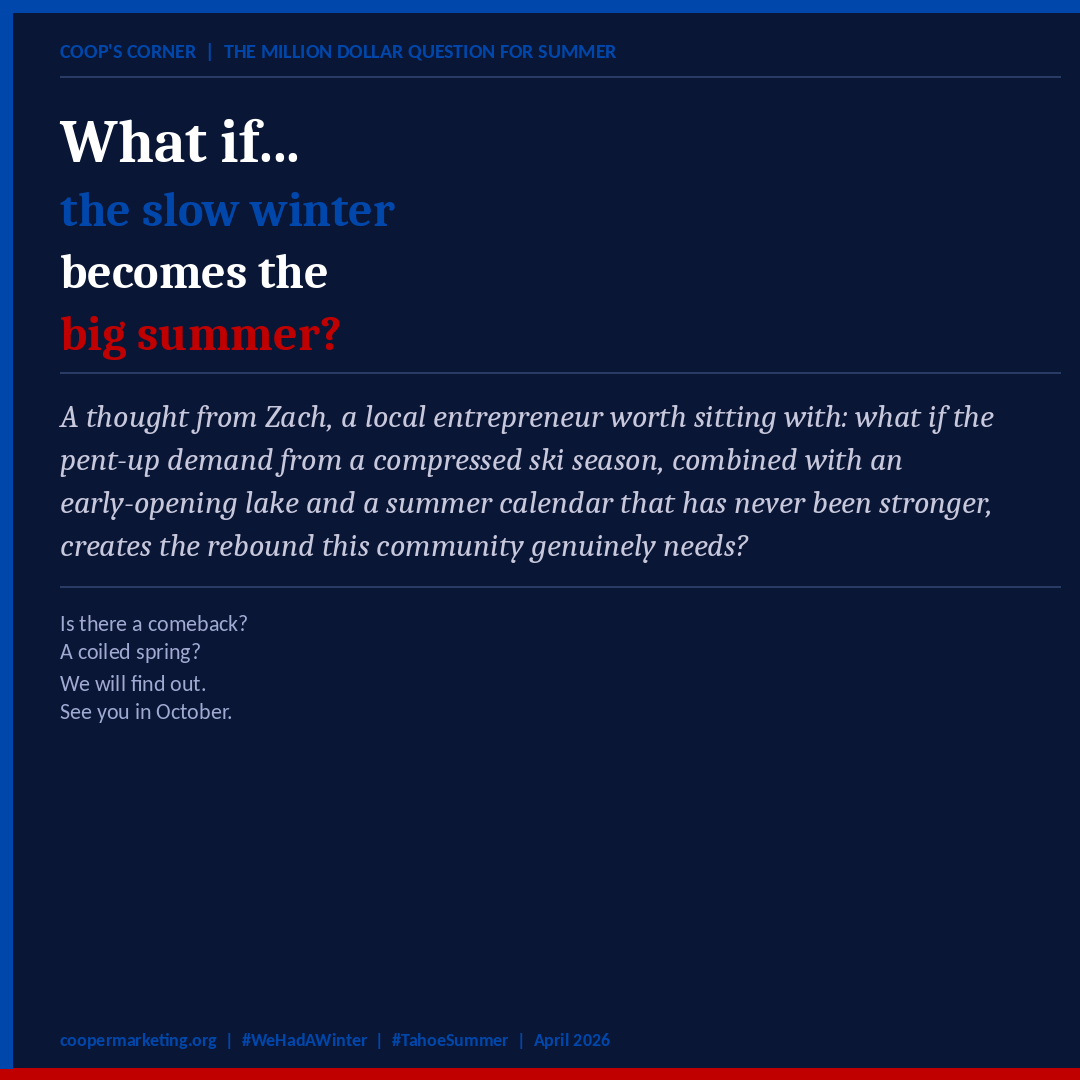
A thought worth sitting with, and full credit to Zach, a local and an entrepreneur who put this on the table in a conversation worth having: what if the low-tide winter of 2025/26 translates directly into a high-volume, high-energy summer season? What if the pent-up demand from skiers who did not get the winter they wanted, combined with an early-opening lake and a summer calendar that has never been stronger, creates a rebound that the community genuinely needs? What if the compressed season is not just a loss but a coiled spring? It is a great question. It is the right question. Coop's Corner does not have the answer in April. But we will be watching the summer numbers, occupancy rates, restaurant counts, and parking lots at Kings Beach and South Shore. Come October, we will revisit. Let it simmer.
THE TEAMS ON THE MOUNTAIN. SAY IT PLAINLY.
I want to stop here and say something that does not get said enough in a year like this one. The teams that opened these mountains in late November and December with borderline conditions, that groomed what little base existed into something rideable, that spun snowguns through every cold night the calendar provided, that kept lifts running on thin margins and smiled at guests who paid full price for a fraction of the terrain: those people are extraordinary. This is not a desk job with a weather problem. This is a physical, outdoor, daily commitment to creating a product out of what the sky gives you, and some winters, #MotherNature is just stingy.
The grooming crews, ski patrol, lift operators, terrain park shapers, and mountain ops teams from KirkwoodMtn, to Sun Valley, to Palisades, to Park City, to Steamboat, to MammothMtn: they showed up every single morning of this season and did the work. Opening day to closing day. On 4 POW days and on 61 days of groomed corduroy, spring corn, and whatever else the season served. Ski Utah’s Alison Palmintere said it plainly in March: “It’s been a great groomer season.” She was right. And there is nothing small about that. A groomer season well-run is a gift to every skier who showed up, regardless of the forecast.
THE SILVER, BECAUSE THERE ALWAYS IS ONE
The Northeast had a banner winter. Jay Peak finished at 122% of normal snowfall. Stowe at 114%. Whiteface at 137%. Cannon at 128%. The Indy Pass sold out in 37 minutes during its 2026/27 public sale. The appetite for skiing is not gone. It got hungry and went looking for snow in the right places. Pass revenue held up better than day-ticket revenue at many western resorts, which is the pass system working exactly as designed. And the resorts being built for the next 20 years are the ones building now for a mountain calendar defined by Tahoe’s actual truth: Christmas to April, with Thanksgiving as a bonus and spring as the closer.
And from a personal standpoint, 65 days on snow in a low year is a privilege that does not escape me. Four genuine POW days in a West-wide drought year means somebody was paying attention and got to the right mountain at the right time. Fifteen comps called. Fourteen thousand reads on coopermarketing.org. One point five million Facebook views. One hundred twenty-four thousand engagements. The HippieHaus had a season even when the snowpack did not. The stokeology is real, it is transferable, and it does not require a banner year to run hot. We had a winter. Just not the one we ordered. And this old salt is already looking forward to the next one.
WHAT COMES NEXT
From 2000 to 2019, the US ski industry collectively lost more than $5 billion due to climate-driven changes to snow conditions. The average ski season has shortened by 5 to 7 days compared to the 1960-1979 baseline, when most western resorts were built. Denver Water declared a Stage 1 drought this spring following historic low snowpack. About 95% of Utah’s water supply traces back to mountain snowpack. These are not ski industry problems alone. They are western water problems, agricultural problems, and municipal supply problems that also shorten the season at your local mountain.
The conversation that needs to happen is not about whether we can have a good winter next year, because of course we can. The Pacific delivers. The Sierra runs deep. It happens. The conversation is about what the structural baseline looks like over the next decade, what mountain communities need from water policy, land management, and long-range planning to stay viable when the snow shows up late and leaves early. That is a big, hard, necessary conversation. Coop’s Corner will be in it.
For now: to every team that got up before dawn and made a mountain out of what they had this winter, thank you. The stoke you generated in a low year is the kind that lasts.
The pass question
Now, the million-dollar question. The one every pass holder, every day skier, every drive-market weekend warrior is asking right now in April after a season like this one: Should I buy a pass or not? Here is Coop’s answer, for what it is worth, and Carolyn and I have already given you ours. Done. Got them. Locked in. Stoked to ride whatever next season delivers, light year or deep year, groomer season or cold smoke, Thanksgiving bonus or Christmas start. We made the call, and we have not looked back. What is in our wallets? Ikon and Epic. That is the quiver. That is the ticket. Two passes that, between them, open virtually every mountain worth riding in the American West and beyond, and both purchased before the early-bird window closes, because that is how you play this game when you have been watching it since 1992.
A lean year is not a reason to walk away from the mountain. It is a reason to lock in at the best price and be ready when the sky opens up. And it will open up. The Sierra always runs deep eventually. The Wasatch will come back. The Cascades will load. The question is whether you are holding a pass when they do.
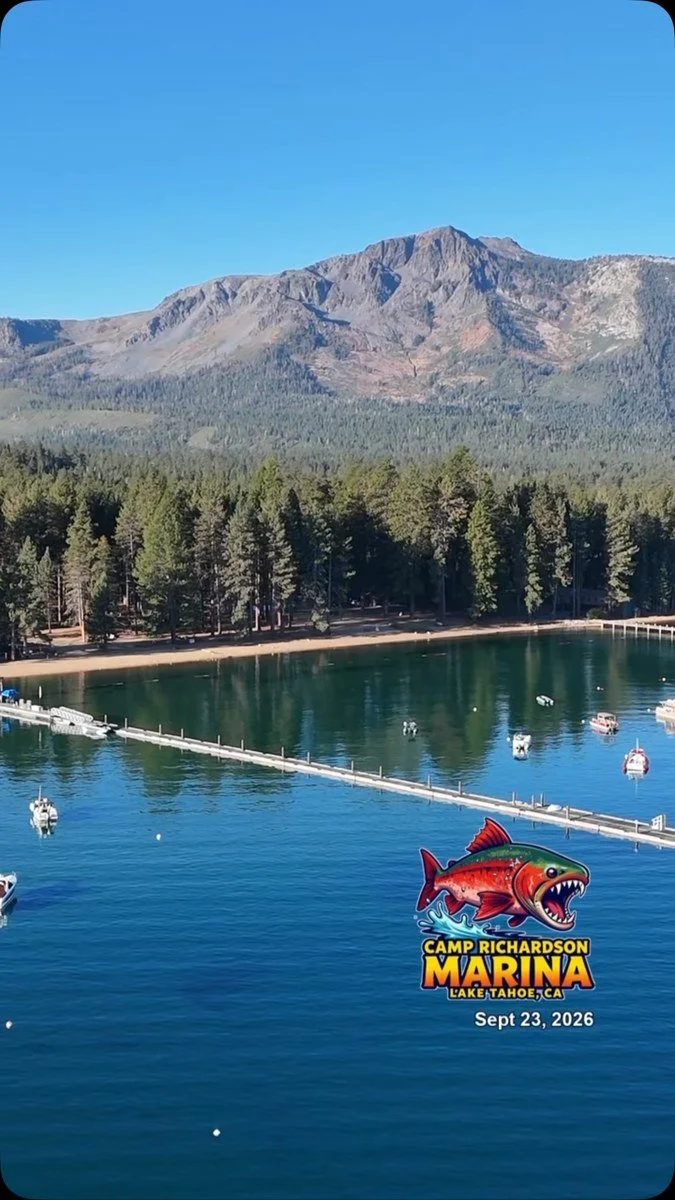
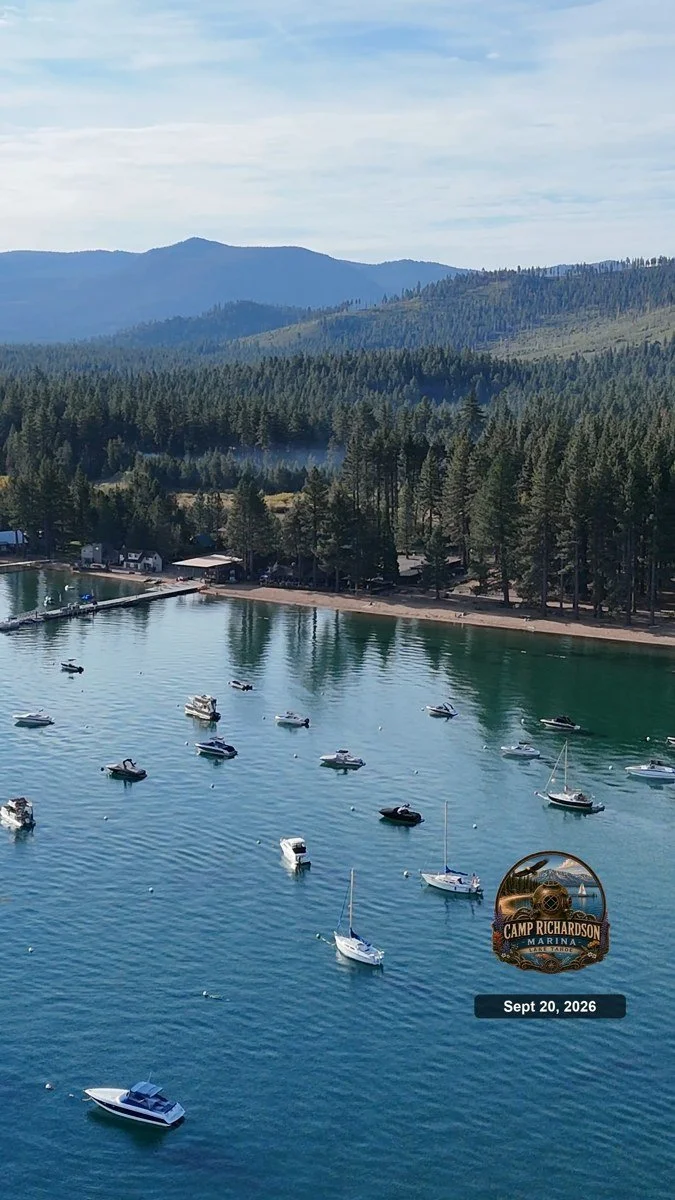
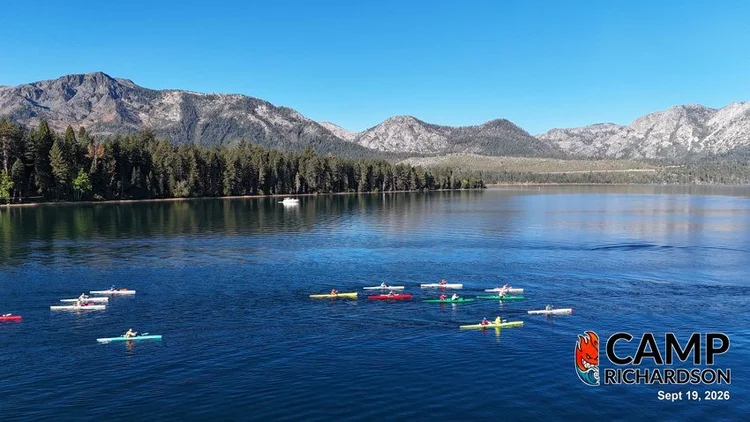
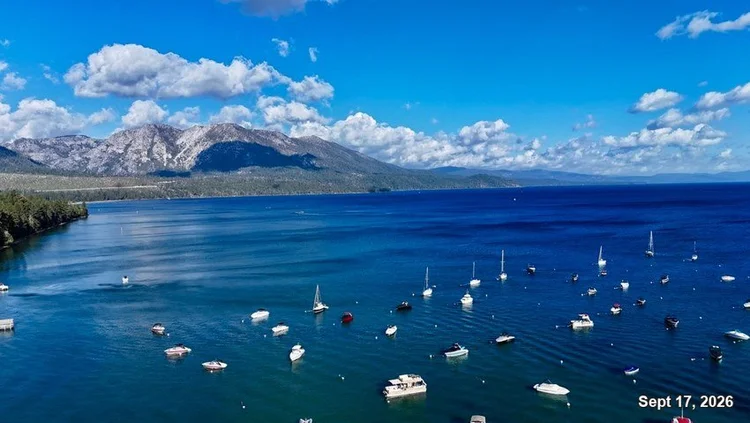
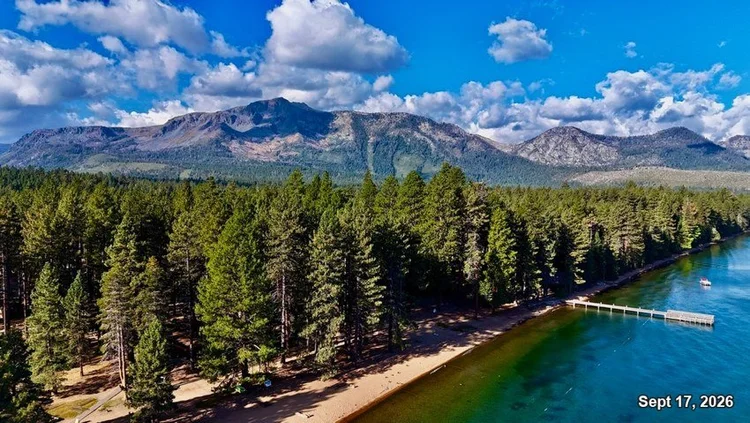
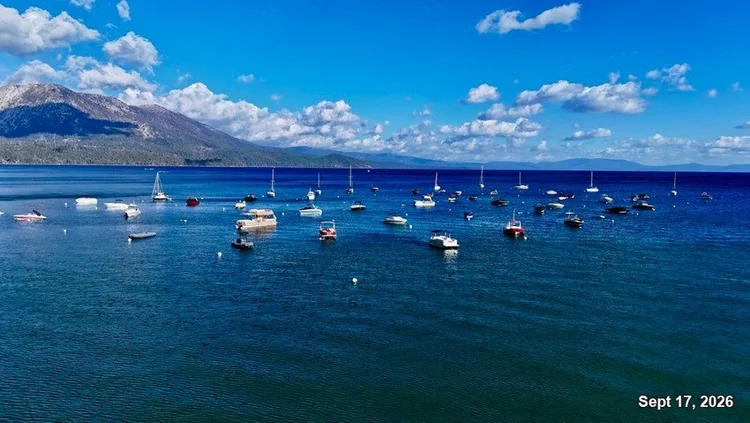
For now, Carolyn and I will see you on the dock at Camp Richardson this summer, or out on the lake for a paddle or a sail. And when the calendar turns, and the first storm rolls in off the Pacific, we will see you on the mountain.
“Whatever side of the climate change fence you are on, cyclical or man-affected, it is changing, and it is having an effect on life, business, and our environment. As a snow enthusiast and one who has made their livelihood in the snow business, and as a sentient being, I am concerned. I will do what I can, when I can, to reduce my carbon footprint in hopes of passing on a world of wonderment to our future generations.”
Coop | RS#69
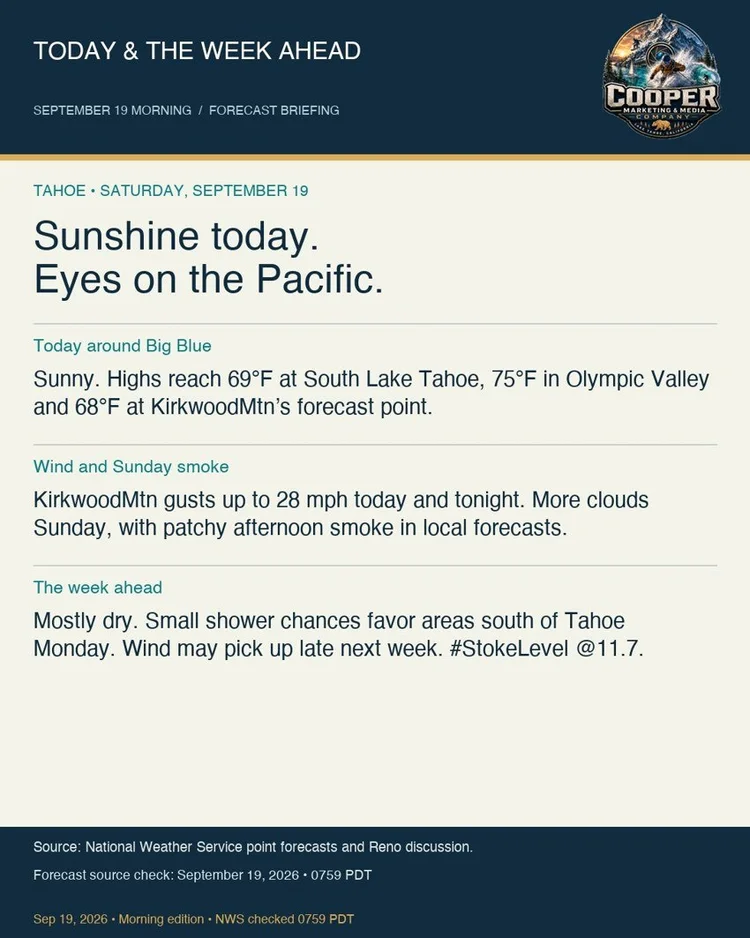
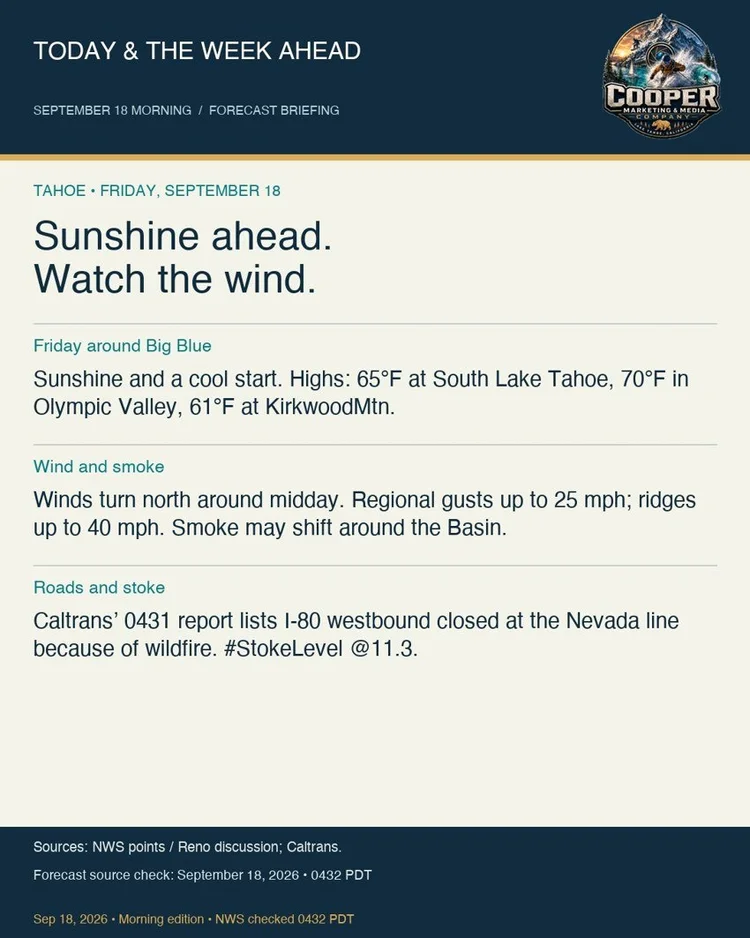
Edited September 14, 2026: This is a retrospective on the 2025–26 season. The November 26 opening target was incorrectly called Thanksgiving Day, and an inconsistent housing-price-to-income comparison has been removed. For the current outlook, read Coop’s Lake Tahoe weather report.