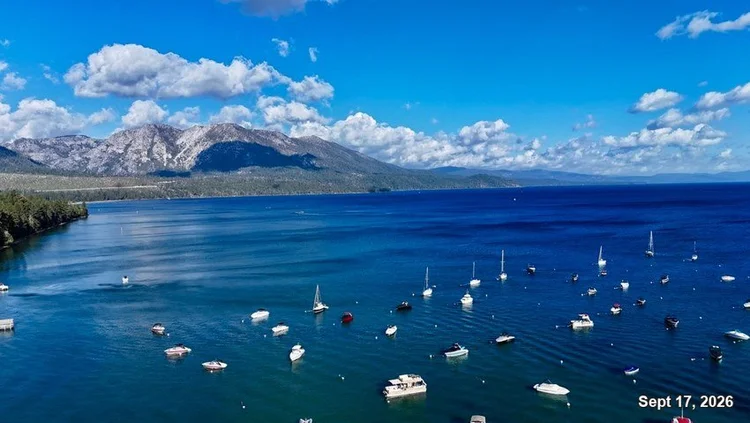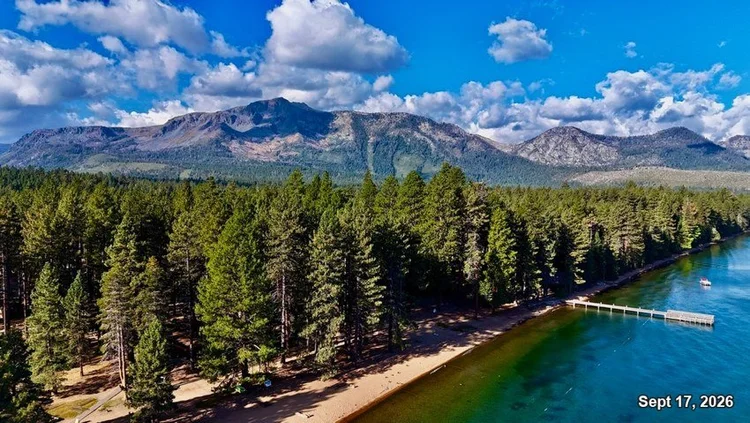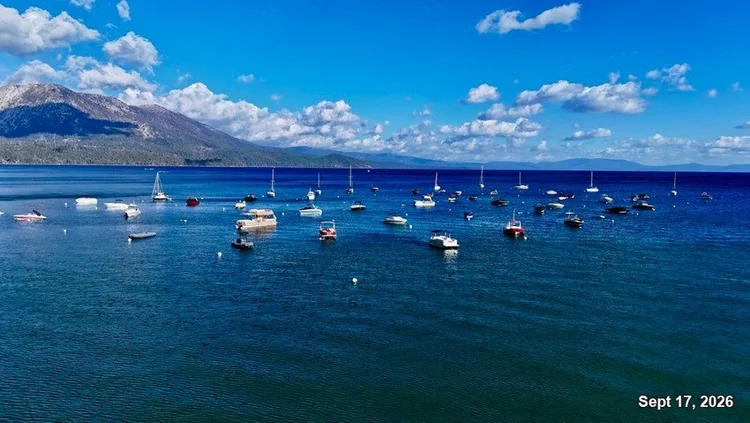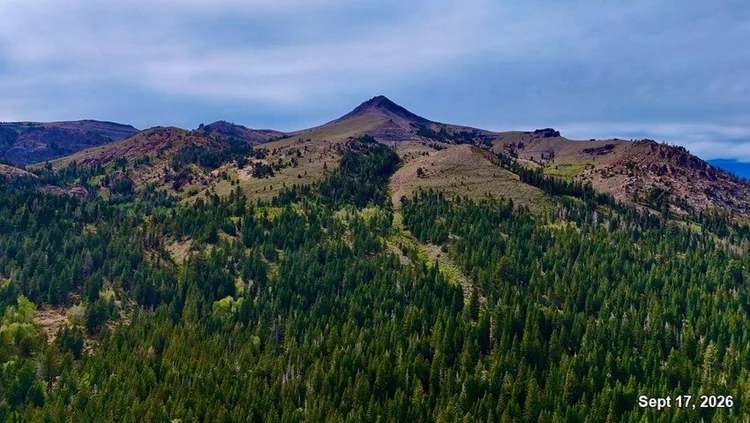
Are we actually saving Lake Tahoe, or have we built the most expensive membership dues program in the history of freshwater ecology? And if we don’t have the solution, we’d better find out who does — fast.
I want to be clear from the jump: this is not an anti-environment piece. I am a Tahoeian. I have been for decades. I care about this lake the way a fisherman cares about the sea, the way a sailor cares about the weather, the way a rescue swimmer cares about the kid in the water. Personally. Viscerally. Not as an abstraction on a grant application. So when I start asking hard questions, understand they come from love, not cynicism. The Dalai Lama would ask these questions. He would just smile more than I do.
THE NUMBERS DON’T LIE, BUT THEY DON’T EXPLAIN THEMSELVES EITHER
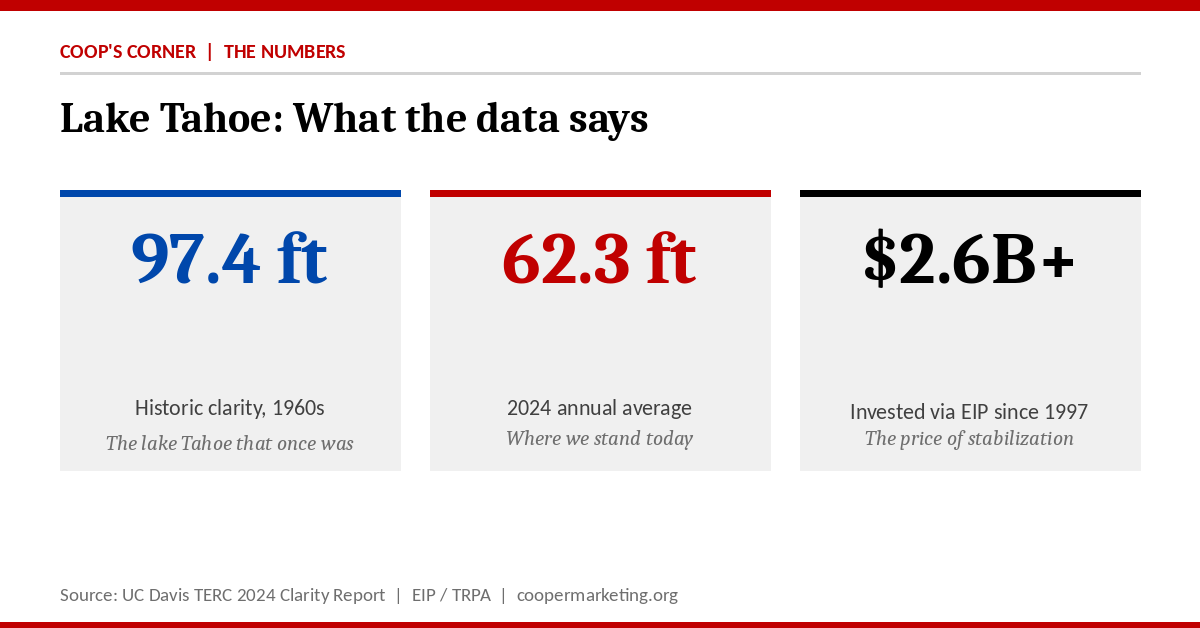
UC Davis Tahoe Environmental Research Center (TERC) published a clear verdict in their 2024 clarity report: Lake Tahoe’s annual average water clarity measured 62.3 feet. In 1968, when TERC first started measuring, it hovered near 97.4 feet. From the 1960s through the 1990s, the lake lost roughly a foot of clarity per year. Then it leveled off. That plateau is not nothing. Calling it “not getting worse” is a legitimate point of honest science.
But here is what TERC director Dr. Stephanie Hampton, a freshwater ecologist and UC Davis professor, said about that same data: “It’s not, at this point, noticeably worse. But it’s not getting better, and we need to find out why.” Read that again. The scientists who have been studying this lake for 60 years do not fully understand why the clarity is stuck. They are not sure what kind of particles are in the water. Is it still sediment? Wildfire ash? Algae? They genuinely do not know. They are asking for more research funding to find out.
“It may be the lake is different than it was 20 years ago, when these policies and practices were implemented. We need to investigate these particles again to find out what kind of particles they are.”
-- Dr. Stephanie Hampton, Director, UC Davis TERC | July 2025
We have spent over $2.6 billion through the Environmental Improvement Program (EIP) alone since 1997. Add the decades of state, federal, and private investment that predate the EIP, and the total runs well past $3 billion by any honest accounting of the public record. The goal, formally committed to under the Lake Tahoe Total Maximum Daily Load program, is to restore clarity to 97.4 feet. The deadline for that goal is 2076. That is not a typo. The year is 2026. The target year is 2076. Fifty more years. And right now, the lead scientific institution overseeing this effort is telling us the lake is not moving in the right direction, and they are not entirely sure why.
80-PLUS PARTNERS, 900-PLUS PROJECTS, ONE QUESTION NOBODY CAN ANSWER CLEAN
The EIP is, by any reasonable measure, a genuine institutional achievement. More than 80 federal, state, local, and private organizations working under one umbrella. Over 900 completed projects since 1997. Meadow restorations, stormwater retrofits, wetland reconstruction, forest thinning, invasive species programs, bike trails. The work is real. The people doing it are real.
Here is something the California Legislative Analyst’s Office put in writing back in 2002: EIP spending is scattered across so many state and federal agencies, and so rarely flagged as EIP spending in budget documents, that no legislature can actually track where the money went, what it bought, or whether it worked. Nobody can hold anyone accountable because nobody can see the whole picture. That is not a marina manager’s opinion. That is Sacramento’s own budget watchdog. In 2002. Twenty-four years ago. Still true today.
So let me ask the question plainly, with compassion and without accusation: with 80-plus partners, who is actually accountable for the clarity number not improving? Not the process. Not the partnership. Not the adaptive management framework. Who? Whose phone do I call? Whose desk does the buck stop on when the Secchi disk hits 62 feet, and the scientists say they are not sure why?
HERE IS WHERE IT GETS TRULY STRANGE
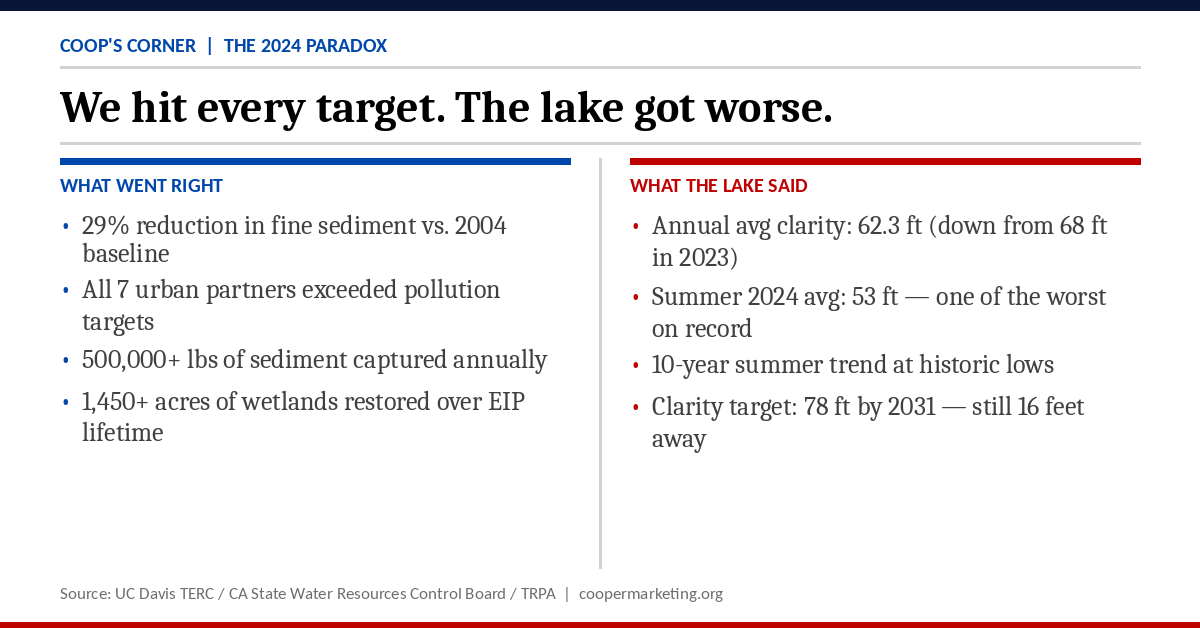
In August 2025, California and Nevada released a joint performance report that stopped me cold. It said that in 2024, TMDL program partners reduced fine sediment loads entering the lake by 29% compared to 2004 baseline levels. Nitrogen inputs dropped 23%. Phosphorus dropped 17%. Every single urban implementing partner exceeded their pollution reduction targets: CalTrans, Nevada DOT, El Dorado County, Placer County, Douglas County, Washoe County, and the City of South Lake Tahoe. Every one of them. By the agency’s own accounting, the program is working.
And yet the 2024 annual average clarity came in at 62 feet, lower than both 2022 and 2023. Summer clarity averaged just 53 feet, among the worst on record for any summer in the past decade. We are catching more pollution than ever. We are meeting every target. And the lake’s clarity is dropping anyway.
That gap between inputs and outcomes is not a failure of effort. It may be a failure of diagnosis. The California State Water Resources Control Board acknowledged this directly, noting that California and Nevada are now working with the Tahoe Science Advisory Council to better understand additional influences on clarity. Which is a bureaucratically graceful way of saying: we do not yet know what is driving this, and we need to find out.
SO WHO HAS THE SOLUTION? LET’S FIND OUT TOGETHER.
I want to say something I do not say lightly, because I have watched too many op-eds end with the writer waving their hands at a problem and then going home for dinner: I do not have the solution. I am a marina manager. I am a ski program director. I am a Tahoeian who paddles on this water and loves it more than most things he can name. I am not a freshwater ecologist, a hydrologist, or a climate scientist. I do not have the data. What I have is the audacity to ask out loud who does, and the conviction that asking matters.
Because here is what I know from 33 years in industries that depend on mountains, water, snow, and the outdoors: the solution to a problem you cannot fully diagnose does not come from doing more of what you have already done. It comes from honest, uncomfortable, courageous science. It comes from a room where the people who actually have the data sit down with the people who actually make the budget decisions, without PR management, without turf protection, and without the comfort of saying “we exceeded our targets” while the lake gets murkier every summer.
THE PEOPLE I WANT TO HEAR FROM
These are not accusations. These are invitations. The following institutions and individuals hold pieces of the answer. Coop’s Corner is a small platform in a mountain town. But the questions are real, and this community deserves to hear these voices answer them publicly.
Dr. Stephanie Hampton | Director, UC Davis TERC
You told us we need to reinvestigate the particles. When does that research begin, what will it cost, and what happens to policy if the answer is “it’s no longer sediment”?
Julie Regan | Executive Director, TRPA
The EIP hit its load reduction targets, and clarity still dropped. What does adaptive management actually look like when the model no longer predicts the outcome? What changes, and who decides?
Lahontan Regional Water Quality Control Board | TMDL Regulatory Lead, California
The 78-foot Clarity Challenge is the 2031 milestone. We are at 62 feet today. Is 78 feet by 2031 still achievable? And if it is not, what is the honest conversation we need to have about what comes next?
Tahoe Science Advisory Council | Workshop Lead, Clarity Research
You held workshops in May 2025 on new clarity research and planned a findings report. What did you find, and when does that become public policy rather than a memo?
Dr. Darcie Goodman Collins | CEO, Keep Tahoe Blue / League to Save Lake Tahoe
You called out that stopping fine sediment pollution is no longer enough. That is a pivotal statement. What is Keep Tahoe Blue’s read on the next frontier, and what will it take to fund it?
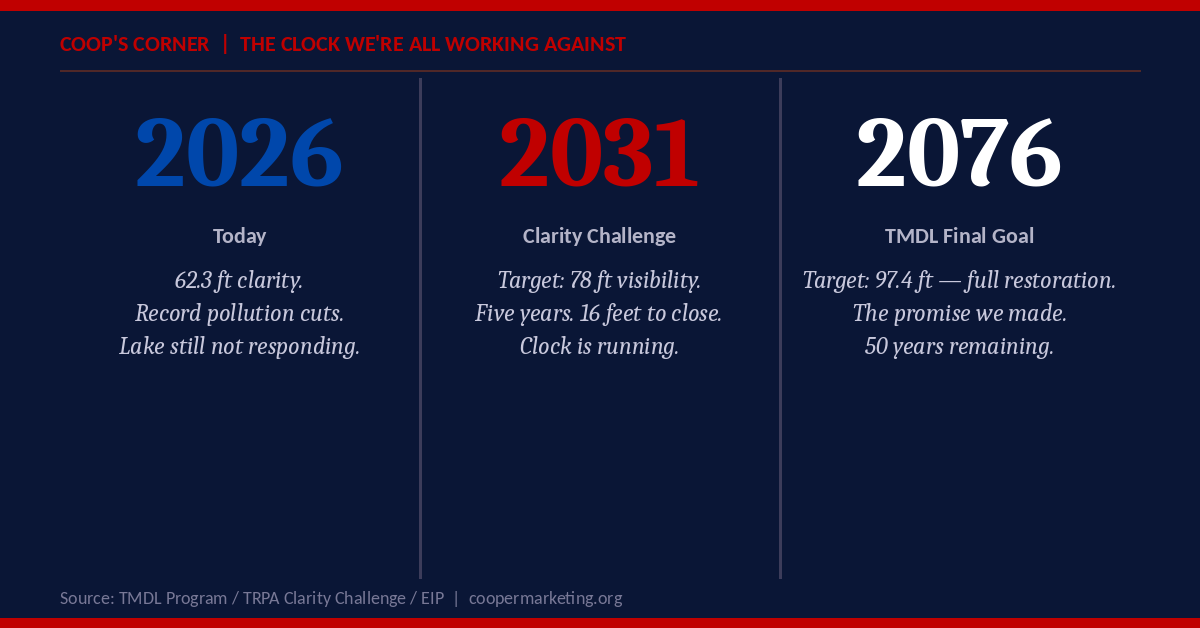
Here is the thing about the 2076 deadline that nobody says in polite company: most of the people who set it won't be around to answer for it. The year 2076 is a promise made by people in 2011 that will be kept or broken by people who have not yet entered the workforce. Every year we delay an honest diagnosis; every year we celebrate targets met while clarity drops; every year we accept “stable, not improving” as an acceptable outcome. We are borrowing time from people who have not yet stood on its shore.
I grew up believing the lake was a gift. I still do. But gifts have to be maintained. And right now, the maintenance plan is not working the way it was designed to work, and the people responsible for it have not fully explained why. That is not an attack. It is an observation. And it is the beginning of a conversation this community needs to have out loud, in the open, with numbers on the table and names in the chairs.
To every agency, scientist, regulator, NGO, and policy maker listed here: Coop’s Corner is a small stage, but it is a public one, and it is yours. Come tell us what you know. Come tell us what you do not know. Come tell us what you need from this community to do better. We are listening. And we will ask follow-up questions.
WHAT I BELIEVE
I believe the people working on this lake are, in the main, serious and dedicated. I believe the science being done by UC Davis TERC is rigorous and honest. I believe the EIP partnership, messy and complicated as it is, represents a genuine attempt at something hard. I also believe that $3 billion, 30 years, 80-plus partners, and a lake that is not getting better is a situation that demands something more than another five-year plan, another adaptive management framework, and another report that says “stable, not improving.”
The lake does not care about our institutional architecture. The Secchi disk does not grant partial credit for coordination. Either the clarity comes back, or it does not. Either we understand what is in the water and we fix it, or we do not. And if we have built a system so distributed, so consensus-dependent, and so structurally diffuse that no single person, agency, or body can be held accountable for the outcome, then maybe that is the most important thing $3 billion has bought us: a very sophisticated way to make sure nobody is responsible.
I hope I am wrong. I genuinely do. Every morning I stand on that dock, I hope I am wrong. But I think it is time to ask. Loudly, kindly, and without letting anyone change the subject to a bike path.
The 2076 clock is ticking. Fifty years sounds like a long time until you realize the last 30 went by without the needle moving. Who has the next step? Let’s find out together.
Coop
Sources: UC Davis TERC 2024 Lake Tahoe Clarity Report | California State Water Resources Control Board / CalEPA Joint TMDL Performance Report, August 2025 | TRPA / EPA Environmental Improvement Program | Lake Tahoe TMDL Program documentation | California Legislative Analyst's Office, 2002 Budget Analysis. Clarity data represents Secchi disk measurements. Public data accessible at the EIP Project Tracker (eip.laketahoeinfo.org) and Lake Clarity Tracker (clarity.laketahoeinfo.org).