The Gravity Problem, Part II: The Empire Answers Back
Katz Broke His Silence. Now Let Us Do the One Thing Nobody in This Circus Is Bothering to Do, and Actually Reason About It.
There is a particular sound a large structure makes right before it starts shedding parts, and if you have spent any time hauling people out of cold water you learn to hear it early. It is not a crash. It is a groan. A low complaint from somewhere below the waterline, the noise a hull makes when the sea has decided something the crew has not yet admitted out loud. I have been listening to Vail Resorts make that noise for the better part of a year, from a chairlift, from a parking lot at 7 a.m., from the strange quiet of a Sierra base area during the warmest winter anyone can remember. And this week the captain finally climbed topside, planted his boots, and told the passengers that everything was fine.
He told us a great deal more than he meant to.
Three months ago, in a piece called "The Gravity Problem," I ran the arithmetic on this outfit and did not enjoy the total. Two companies commanding roughly half of all American skiing and a dominant share of the marquee destination terrain. A single day at Vail priced at $356, rigged so the thousand-dollar pass feels like the only sane purchase a rational animal could make. A stock down more than 60 percent off its 2021 peak. A dividend paid out at more than 100 percent of earnings, which is the corporate finance equivalent of burning the furniture to heat the house and calling it warmth. A federal antitrust complaint. A climate quietly rewriting the revenue model underneath the whole cathedral. I borrowed Hemingway to describe how a leveraged ski company actually goes broke: gradually, then suddenly.
We are now standing in the suddenly, and it smells like singed upholstery.
So here is the deal for this sequel. I am going to try to do the single thing the market, the activists, and the CEO are all failing to do at the same time, which is separate the signal from the noise, check the base rate before I panic, and update my beliefs like an adult instead of a degenerate at a craps table. Gonzo is the delivery. The reasoning underneath it is going to be cold, sober, and Bayesian, because righteous velocity with no arithmetic behind it is just yelling, and the mountains have enough wind already.
I. First, Burn Off the Noise
Reason begins by throwing out the garbage data, and this story is drowning in it.
In mid-June, Semafor reported that Vail had quietly retained takeover-defense bankers to poke at its own soft spots. The stock ripped up 11 percent inside a few hours. Understand what that spasm actually was: not information about the business, which had not changed one iota between Tuesday and Wednesday, but a pure hit of narrative adrenaline. The market got a whiff of a possible breakup and reacted the way a crowd reacts to a fistfight, all availability heuristic and affect, betting on the story rather than the spreadsheet. That 11 percent pop is noise. Beautiful, loud, tradable noise, and if you build a thesis on it you will get carried out on a board.
Here is the signal, the stuff that does not move on a rumor because it is welded to reality: resort revenue down 7 percent to $1.21 billion. Net income down to $314 million from nearly $390 million a year prior. Total skier visits off a genuinely violent 15.5 percent after the worst Rockies snow in more than three decades. Pass units for next season running down about 10 percent. Net debt at $2.65 billion, roughly three and a half times EBITDA. A dividend that clears tomorrow, July 9, at a payout the cash flow can barely field. Guidance cut by the company's own hand.
Noise is what the crowd feels. Signal is what shows up whether anyone is feeling anything or not. Keep the two in separate buckets and most of this circus resolves into something you can reason about. Fail to, and you are just another face in the pit screaming at a chart.
Into that mess walks Rob Katz, rehired captain, onto his own Epic By Nature podcast, to defend the fortress. It was the most revealing thing the company has said in a year, and the revelation was almost entirely accidental.
II. Steelman the Man Before You Skin the Argument
I am now going to do the thing gonzo is not supposed to do, which is give the target the strongest possible version of his own case, because attacking the weak version of an opponent is a cheat, a weak-man fallacy, and I did not learn to think from people who cheat.
Katz's core argument is that the owned-and-operated network is not a bloated liability waiting to be unwound. It is the entire moat. He says the web of wholly owned resorts is precisely what made the Epic Pass possible in the first place, and that owning the physical properties is what lets Vail set lift pricing, run local marketing, harvest skier data, and flip discounts on and off across the whole portfolio in a single afternoon. He drew the contrast with his rival like a man who has run the numbers: Alterra coordinates the Ikon Pass across roughly 70 partner destinations but directly owns only about 18 of them, which means a large slice of that network is independent operators who guard their own pricing. A partnership model, Katz warned, strips the parent company of the levers that actually matter.
On the mechanics, he is right, and intellectual honesty requires me to say so at full volume. That integrated control is exactly why Vail could turn around and stamp an $889 young-adult pass onto the 18-to-30 market on short notice, eating the risk because it owns the whole ecosystem outright. In a business this exposed to a coin flip called weather, unified control has real expected value. And it just proved itself: in a catastrophe winter that gutted visits by better than 15 percent, lift revenue fell only 5.3 percent and resort margins barely flinched, because the pass money was already in the till before the snow failed to show. That is the model working exactly as it was drawn. The moat is not imaginary. Anyone selling you a story where Katz is a fool is selling you a story, and stories are the noise we already agreed to throw out.
But then the captain kept talking, and the hull groaned right through his speech.
III. The 300-Year Tell
A tell, in the poker sense Pinker would appreciate, is a signal that leaks through the noise a player is generating on purpose. The player controls the speech. The player does not control the leak. And when Katz was asked about selling Park City to the circling billionaire Matthew Prince, he produced a leak the size of a snowcat.
He did not merely say no. He said the whole conversation was, in his word, silly, and then he explained why. Vail cannot sell Park City Mountain, he said, because Vail does not own the ground under it. The company operates the terrain on a lease that runs, by his account, roughly three hundred years, held from an old mining enterprise. You cannot sell what you only lease. Case, he figured, closed.
Read that again slowly, because I do not think he heard himself.
The entire spine of "The Gravity Problem" was one heretical idea: the assets are permanent, and the corporations are temporary. The mountains do not care who signs the checks. When Vail charges you $356 to slide down terrain the public effectively owns, it is not setting a price so much as collecting a toll on access it was granted rather than access it built. This was never a secret to anyone inside the sport. The U.S. Forest Service oversees 122 ski areas that supply about 60 percent of the nation's downhill skiing capacity, with roughly half of all American skier visits landing on terrain leased to private operators under special-use permits. Nearly every marquee resort in the West, the Tahoe mountains I stand on included, sits substantially on public land. It is a commons with a turnstile bolted to the bottom of it, and the turnstile has been mistaken for the mountain.
Katz just confirmed the whole architecture on his own podcast, as a defense, with a straight face. He told the planet that his flagship is not a possession. It is a lease. Vail does not own the mountain at Park City. It owns the toll booth at the base of it, and the pass that lets you through.
That is the tell, and it detonates the premise of the fight. The asset-heavy empire Katz is defending against Prince and the activists is, by the chief executive's own admission, a stack of leases, permits, and operating agreements draped over granite that belongs to the Forest Service, to a mining company, to geology itself. The empire is not the mountains. The empire is the paper on the mountains and the software that sells you your way onto them. Which drags the real question into the light, the one the market is now asking through its teeth: if the corporation is just the operator, what exactly is the conglomerate premium buying?
IV. The Admission Hiding Inside the Admission
There was a second confession in that broadcast, quieter, and to a rational reader it matters as much as the first.
Katz conceded that pass sales across the entire industry are leveling off after a decade of climbing units and climbing prices. He served it up as a natural plateau, the tone of a man describing weather. I am going to translate it into English, because that is what a friend does when a friend is spinning.
You cannot raise the Epic Pass 37 percent over six seasons, park the day ticket north of $350 to herd the herd, and then arrange your face into surprise when the well of fresh buyers runs shallow. That is not a plateau descending from the heavens. That is a demand curve doing the one thing demand curves reliably do, which is bend when you shove price into it, and the only people shocked by it are the ones who were motivated not to see it coming. In March we said the pricing had gone coercive and the customer base was aging faster than it was being replaced. The numbers have only sharpened since: the median American skier is now 38, up from about 30 a decade ago, and the under-25 share has slid from 41 percent to 34 percent in ten years. The plateau Katz just described is that exact prediction cashing its check.
And here is the beautiful part, the part where the company files its own Bayesian update in public. The $889 young-adult pass is not a marketing garnish. It is Vail conceding, in the language of a price cut, that it walled the next-level gen out of the sport and now urgently needs them back inside the fence. That is not a shot from the cheap seats. That is the enterprise's own product roadmap admitting the thesis.
Now the honest counterweight, because a friend does not cherry-pick. Total American skier visits are still sitting near record highs, better than 60 million a year, and independents are posting some of their best seasons ever. The sport is not shrinking in raw bodies. It is aging, and it is failing to convert its young guns into lifers, which makes this a long-fuse problem rather than a present-tense collapse. But a long fuse is still a fuse, and Vail helped light it by turning the entry price into a wall.
V. The Fork, Played as a Game With Actual Rules
Strip the palace intrigue and you are left with a genuine strategic question, the sharpest one the sport has faced since the Epic Pass launched in 2008, and it deserves to be played out as the game it actually is rather than the melodrama the headlines want.
Prince and the asset-light camp make a clean offer: stop tying up billions in real estate and debt, become the franchise brain and the pass and the platform, and let owners carry the dirt. That is close to Alterra's house-of-brands posture, and it is lighter on its feet when the sky refuses to deliver. Katz and the asset-heavy camp counter: the instant you surrender the ground you surrender the pricing, the data, and the ability to move as one animal, and you degrade into a logo renting relevance from people who can walk. Both positions are internally coherent. That is what makes it a real game and not a morality play.
But the players have already tipped their hands, and game theory says watch the money, not the mouth. When activists start circling and the stock jumps on the rumor of a breakup, they are placing one specific, legible bet: that Vail's mountains are worth more sold off one by one than they are worth bolted together under a single leveraged, dividend-bleeding, Broomfield-run roof. In plain terms, the conglomerate premium has quietly curdled into a conglomerate discount. That, and not padlocked lifts, is the actual content of the word "demise" the headline writers keep grabbing for. The market has begun to price the empire below the sum of its peaks. The stock has even clawed from the low 120s back toward 140 in recent weeks, and it did so largely on breakup chatter, which tells you plainly which outcome the money is rooting for.
Now the honest part, the part Pinker would demand and the part the doom criers skip: this is a probability, not a prophecy, and I am not going to pretend to a precision I do not have. Ron Baron, holding around 14 percent since the last downturn, is standing pat and betting the whole holds, and he is not a stupid man. Katz himself dropped nearly $5 million of his own money into the stock this spring, which is not the posture of a man who thinks the ship is going down. Half of Wall Street still rates the stock a buy and calls it undervalued. Katz flatly denies the company has hired any bankers at all, and maybe that is even true. So let me name the condition that would prove me wrong, because a thesis you cannot falsify is a horoscope. If snowpack normalizes for two straight seasons, pass units claw back, and leverage drifts under two times EBITDA, then the fragility case weakens hard and the fortress was just weathering a bad patch. That is the test. I will hold my belief exactly as tightly as the evidence earns, and not one notch tighter.
VI. What the Mountain Is Actually Telling Us
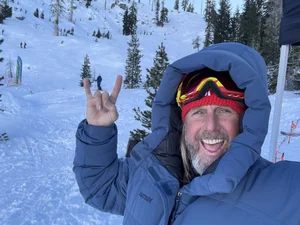
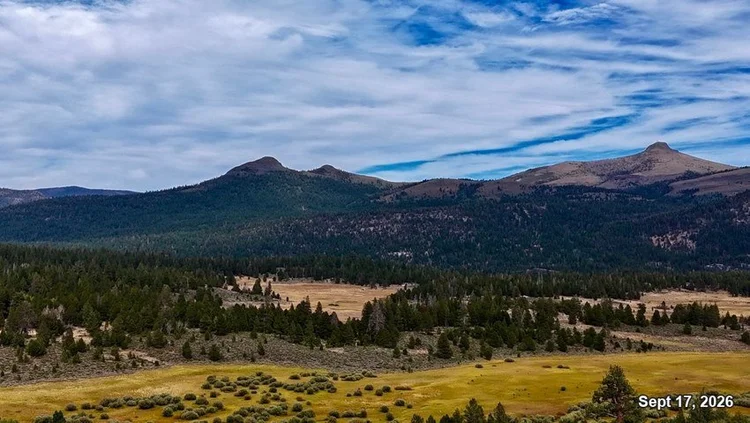
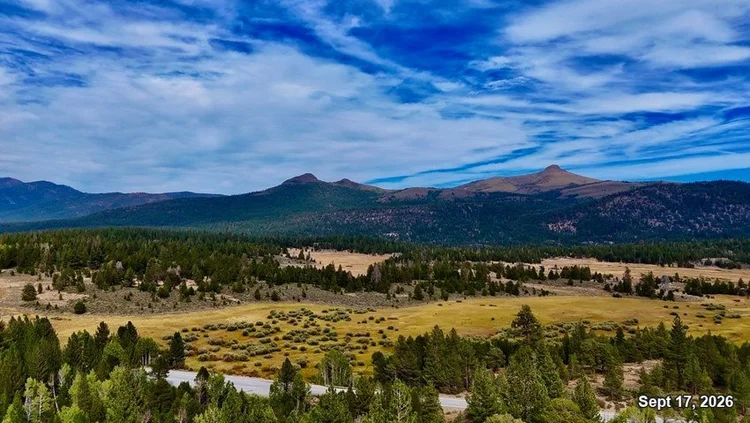
I am not filing this from a trading desk. I run an alpine race program at Kirkwood, which sits inside the Vail network, which means I watch this from the lift line with the future generation clicking into bindings before the wind comes up and the light goes flat. Lake Tahoe got named by name in Vail's own filing as one of the weather-hammered markets dragging the numbers under this year. I did not need the paperwork. I read it off the snow.
So let me be dead clear about what I am not doing. I am not dancing on anybody's grave, because that is not the move and it is not who we are up here, and because it would also be, on the evidence, wrong. Here is the base rate the panic keeps forgetting. When American Skiing Company disintegrated two decades ago, carrying heavier leverage than Vail hauls today, north of five times EBITDA against Vail's three and a half, not a single one of its resorts closed. Not one. They were sold off, one at a time, to focused regional operators, and several of them got better. The lifts kept spinning. The debt evaporated. The assets stayed exactly where the last ice age left them.
That is the whole consolation and the whole warning in one fact. Corporations are mortal. Mountains are not. Whatever happens in the proxy fight, whoever signs the checks next winter, the lifties and the patrollers and the instructors and the young guns falling in love with sliding on snow for the first time are the actual stakes here, and they are more durable than any capital structure ever dreamed up in Broomfield.
VII. Gravity Always Wins
Les Otten learned, at a cost measured in nine figures, that the mountain is patient and the debt is not. The terrain waits. The weather stays gloriously indifferent to earnings calls. The dividend clears tomorrow whether or not the snow shows up next December, and that sentence is the entire tragedy compressed into one line.
Rob Katz stepped to the microphone this week to defend an empire, and in the act of defending it he handed us the truth about it: he does not own the mountain, he leases it. The pass sales have plateaued. And the structure holding forty-two peaks together is a corporate arrangement the market has started to value at a discount to the rock underneath. That is not a man losing an argument. That is a genuinely sharp operator staring straight at the same gravity problem the rest of us have been staring at, and choosing to call it silly rather than call it by its name.
The empire will not vanish in the night. But the age of growth-forever, consolidate-everything, the-pass-solves-all is finished, and it is not walking back through that door. The only live question is who writes the next chapter, and whether they remember what a day on the mountain was supposed to be worth before somebody turned it into a spreadsheet.
VIII. Meanwhile, Back Home: An Open Casting Call for Kirkwood
Let me climb down off the macro perch and get local, because I do not write about this sport from a spreadsheet in Broomfield. I write it from Kirkwood, my home mountain, the steepest, snowiest, most gloriously inconvenient piece of terrain in the Tahoe Basin, and currently property number who-knows-what in a forty-two-resort portfolio the market has decided is worth more in pieces than whole.
So let us reason honestly about the piece that is mine.
If the activists get even half of what they are reaching for, Kirkwood is not the mountain that survives the cut. It is the mountain that goes first. Run the profile the way a coldhearted analyst would. Non-core. Off the destination map. Off the actual power grid, generating its own electricity between two mountain passes ever since the old plant burned in 2010. An expert-heavy locals' mountain that was already hunting for a buyer when Vail scooped it up for roughly $18 million back in 2012. That is not a crown jewel on a divestiture list. That is the first line item on it. Katz can say on his podcast that he does not want to sell anything, and I believe he means it today, but activists do not care what the captain wants, and gravity does not take meetings.
Here is where I stop worrying about it and start recruiting, because a reckoning without a plan is just anxiety with a nice view.
The napkin math is not insane. Call it the low twenties, say $21 million, to get in the door, a hair over what Vail paid when this outfit was bleeding money. Then call it another $37 million for the long haul: the lifts, the snowmaking a warming climate now demands in writing, and that stubborn off-grid power situation that eats capital the way a woodstove eats kindling. Is that upgrade figure a fantasy? It is not. Reed Hastings just committed on the order of $40 million to public lifts and terrain at Powder Mountain, a comparable independent, which means my number is not a dream, it is the going rate for taking one of these mountains seriously.
Which brings us to the casting call. Who has that kind of money, and, the harder question by a mile, that kind of patience? I count three real archetypes, and I have watched all three run in the wild.
Option one, the passion billionaire. A Reed Hastings or a Matthew Prince who buys the mountain because they love it and funds the upgrades off high-end real estate. It works. It also carries a catch, because Hastings got himself nicknamed "Greed" the day he roped off private lifts, so left unwatched this model drifts toward an enclave with a velvet rope where a lift line used to be.
Option two, the focused regional operator. The unglamorous grinders who run mid-size mountains better than any conglomerate ever will, the Whitefishes of the world, independent and thriving and posting some of their best seasons on record precisely because they never once treated a guest as a line item. This is the safe bet, and safe is badly underrated in a business this exposed.
Option three, and the one that makes my salt-crusted heart actually pick up a beat, community ownership. A skier-owned cooperative or a nonprofit, the model that has kept Mad River Glen and Bogus Basin and Bridger Bowl fiercely, stubbornly themselves for generations. A locals' mountain, owned by the locals who love it. There is a poetry in that at Kirkwood the other two options cannot touch.
Could new ownership be worse? Absolutely. A bad buyer could strip it, gate it, or price the soul clean out of it, and I will be first in line at the permit hearing if anyone tries. Could it be better? Also absolutely. Cut loose from a Broomfield balance sheet and a dividend it is forced to feed, run by people whose only shareholders are the snowpack, the community, and the next-level gen learning to link turns on the best snow in the Basin, Kirkwood could finally become the thing it always was before it got folded into an empire.
So here is the pitch, and I am only half kidding. Kirkwood Mountain Resort. Twenty-three hundred acres of the finest steep terrain in Tahoe, the deepest average snowfall in the Basin, and a soul no spreadsheet ever fully managed to capture. Bring $21 million and the nerve to spend $37 million more. Bring patience measured in decades, not quarters. And bring the humility to understand what Katz accidentally confirmed on his own podcast: you never really owned the mountain anyway. You just get to be its steward for a while.
Taking all applications now.
I will be out there, watching from the chair, where you can see the whole thing coming in long before it arrives.
Keep your edges sharp and your stoke higher.