Pedals, Not Pegs: Why the Future of Tahoe Trails Depends on How We Ride
A conversation about stewardship, access, and keeping our dirt sacred
I’ve seen it more times than I can count now.
I’m out on a trail in the basin hiking with the woofs (Thor & Bella) harnessed up, maybe just taking in the quiet of the forest, and I hear it before I see it. That electric whine, building fast. Then a bike blows past, rider’s feet planted on pegs, not turning pedals, moving at a speed that doesn’t match the terrain or the traffic around them.
It’s happened on single-track. It’s happened on multi-use paths. Over the past two years, I’ve lost count of the encounters. And each time, I think about the trails I love, the community that’s built them, and what we stand to lose if we don’t start having an honest conversation.
Let me say this upfront: I’m a fan of recreation. All of it. I love that people get outside, whether they’re hiking, biking, riding dirt bikes, or cruising OHV trails. More people enjoying public lands is a good thing. Multi-use trails, state park paths, bike paths, and OHV areas all have their place and serve different users with different needs.
But the keyword there is different. These designations exist for a reason. And what I keep seeing on the trails here in the basin is a crossover that’s blurring lines we can’t afford to blur.
This isn’t about pointing fingers. It’s not about shaming anyone. Most of the people I’ve seen riding throttle-powered devices on these trails probably don’t know the distinction between what they’re riding and a pedal-assist e-bike. Someone sold them a product they called an “e-bike” and sent them on their way.
But the distinction matters. And if we care about keeping these trails open for all of us, we need to talk about it.
I want to be clear about where I’m coming from: I’m not speaking as a member of TAMBA or a member of, or any official representative of, period. I’m speaking as someone who advocates for the work they do, the tireless effort to preserve and steward our trails, and support the mountain bike community. The volunteers who show up on dig days, the advocates who sit in meetings with land managers, the people who’ve spent decades building the access we enjoy today. That work is too important to stay silent while the ground shifts beneath it.
So let’s talk.
First, Let’s Get Clear on What We’re Actually Talking About
The term “e-bike” has become a catch-all that’s causing real confusion and real-world problems. When someone mentions their new e-bike, they might be talking about any of the following:
Class 1: Pedal-Assist (20 mph max)
These bikes have a motor that only engages when you’re pedaling. Stop pedaling, motor stops. They top out at 20 mph of assisted speed. After that, you’re on your own power. These are the bikes that land managers, advocacy groups, and most of the mountain biking community have broadly accepted as compatible with non-motorized trails.
Class 2: Throttle-Equipped (20 mph max)
Here’s where it gets complicated. These bikes have a throttle twist it or push it, and the motor propels you forward without any pedaling required. Same 20 mph limit as Class 1, but fundamentally different in operation. You can ride these without ever turning the cranks.
Class 3: Speed Pedelec (28 mph max)
Pedal-assist like Class 1, but with a higher top speed. Generally restricted from most trails due to the speed differential with other users.
And then there’s the gray market…
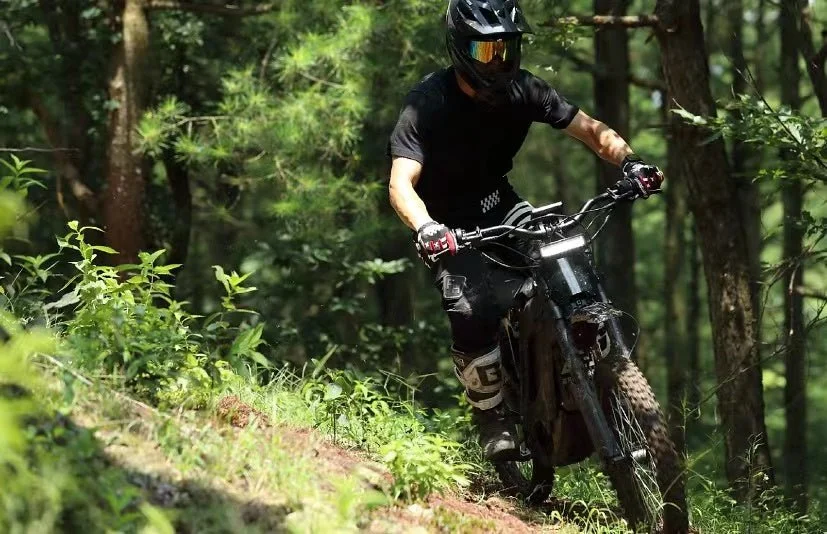
This is where things get wild. Devices marketed as “e-bikes” that are really electric mopeds or motorcycles with pedals bolted on as an afterthought. We’re talking 2,000+ watt motors, top speeds of 40-50 mph, and weights pushing 80-100 pounds. These aren’t bicycles by any legal or practical definition. But they’re being sold as “e-bikes” and showing up on our trails.
When we talk about “pedals, not pegs,” we’re drawing a line. Not between human-powered and electric-assisted. The line is between devices that require you to pedal and devices that don’t.
That’s the distinction that matters.
Understanding Trail Designations: Why They Exist
Before we go further, it’s worth stepping back and understanding why we have different trail designations in the first place.
OHV (Off-Highway Vehicle) Trails are specifically designed and designated for motorized recreation. Dirt bikes, ATVs, side-by-sides, 4x4s, these trails are built to handle motor-powered vehicles. The infrastructure accounts for it: wider paths, different surface treatments, signage for motorized traffic, and maintenance schedules that expect engine-powered wear and tear. If you want to ride something with a throttle off-road, OHV trails are where that belongs. And there are great OHV areas throughout California and Nevada, designed exactly for that kind of riding.
Multi-Use Trails and State Park Paths are designated for non-motorized recreation: hikers, mountain bikers, equestrians, trail runners. The “multi” in multi-use refers to multiple types of human-powered (or horse-powered) users sharing the same space. These trails are designed with sight lines, grades, and surfaces calibrated for the speeds and impacts of non-motorized traffic.
Bike Paths (like paved paths along roads or through parks) often allow Class 1 and sometimes Class 2 e-bikes, depending on local regulations. But even here, there are speed limits and expectations about how users interact.
The problem I keep seeing is throttle-powered devices crossing over onto trails where they don’t belong not because OHV riding is bad (it’s not), but because the trails weren’t designed for it, and the other users didn’t sign up for it.
I’m not anti-motorized recreation. I’m pro using the right trails for the right purpose. If you want to ride a throttle bike, there are places built for exactly that. But a hiking and biking trail in the basin isn’t one of them.
The Case for Keeping Throttles Off Non-Motorized Trails
Let me be direct: I’m not here to say throttle bikes are evil or that the people who ride them are bad actors. Most aren’t. They’re people who want to enjoy the outdoors, and someone sold them a device and told them it was an “e-bike.”
But there are real, practical reasons why throttle-equipped devices don’t belong on trails designated for non-motorized use.
Speed Differentials Create Danger
A Class 1 e-bike climbing a hill might be moving at 8-12 mph. A traditional mountain biker climbing that same hill might be at 5-8 mph. A hiker is at 2-3 mph. These speeds are all in the same general zone where everyone can see each other coming, react, yield, and communicate.
Now put a throttle bike in that mix. A rider who doesn’t need to manage their effort can maintain 20 mph on a climb that everyone else is crawling up. The closing speed on a hiker goes from manageable to startling. The margin for error shrinks. Near-misses become common. And eventually, someone gets hurt.
The data backs this up. A study published in the American College of Surgeons found that e-bikes are three times more likely to hit pedestrians than traditional bicycles. E-bike incidents in California increased 18.6-fold over five years.
These aren’t just numbers. They’re hikers with broken bones. They’re near-misses that could have been worse. They’re the incidents that lead to lawsuits—and trail closures that follow.
The “Motorized” Classification Matters for Access
Here’s something a lot of riders don’t fully appreciate: the only reason we have access to most of the trails we ride is because bicycles are classified as non-motorized.
When advocacy groups negotiate with the Forest Service, BLM, state parks, and local land managers, they’re operating within a legal framework that distinguishes between motorized and non-motorized use. Wilderness areas, for example, are completely closed to motorized vehicles, full stop. Many other trails are designated non-motorized specifically to protect sensitive habitat, reduce erosion, and minimize user conflicts.
A throttle is a motor control. When you can propel a vehicle without human power, you’ve crossed the line into motorized territory. It doesn’t matter if the motor is electric instead of gas. It doesn’t matter if the top speed is “only” 20 mph. The legal and regulatory distinction exists for reasons that go far beyond speed.
Every time a throttle bike rolls onto a non-motorized trail, it gives ammunition to the people who want to ban all bikes from trails. “See? They can’t follow the rules. They don’t respect the designations. Why should we give them any access at all?”
Don’t think it can happen? Ask the hikers and equestrians who’ve been trying to kick us off trails for decades. We’ve held onto access because we’ve been able to argue credibly that mountain bikes are non-motorized, human-powered vehicles that are compatible with other non-motorized uses.
Throttles blow up that argument.
Trail Infrastructure Wasn’t Built for This
The trails we ride didn’t appear by magic. They were surveyed, designed, dug, and maintained by volunteers and professionals who understood the specific demands of non-motorized traffic.
Sight lines are calculated based on expected closing speeds between hikers, horses, and bikes. Switchbacks are designed for the turning radius and traction characteristics of human-powered vehicles. Drainage structures are built to handle a certain amount of traffic at certain weights.
Throttle bikes, especially the heavier, more powerful gray-market devices, change the equation. Heavier vehicles displace more soil. Higher sustained speeds on climbs create different erosion patterns. The ability to accelerate out of corners (rather than pedaling through them) changes how tires interact with the trail surface.
Am I saying every throttle bike destroys trails? No. I’m saying the trails weren’t designed for them, and over time, increased throttle traffic will require different (and more expensive) maintenance approaches. Someone has to pay for that. Usually, it’s the volunteer organizations and land management agencies that are already stretched thin.
OHV trails, by contrast, are built and maintained with motorized use in mind. That’s where throttle-powered recreation belongs.
The Counterargument: What About Accessibility?
This is where the conversation gets harder, and where I want to be genuinely fair to the other side.
Throttle-equipped bikes provide real accessibility benefits for some riders. People with certain disabilities, injuries, or health conditions may not be able to maintain the consistent pedaling that Class 1 bikes require. For them, a throttle isn’t about laziness or cheating; it’s about being able to participate at all.
I’ve talked to riders who’ve had knee replacements, heart conditions, neurological issues that affect their coordination. For some of these folks, a throttle is the difference between riding and not riding.
That’s a legitimate concern. And I don’t think the answer is “too bad, stay home.”
But here’s the thing: we can support accessibility without opening all non-motorized trails to all throttle devices.
Some possible approaches include designated trails or trail segments where Class 2 devices are explicitly permitted, permit systems for riders with documented accessibility needs, time-of-day or day-of-week restrictions that reduce user conflicts, and speed limits on multi-use paths enforced regardless of device type.
The point is, accessibility needs can be addressed through thoughtful policy rather than blanket permission. “Let everyone ride everything everywhere” isn’t the only alternative to “ban all throttles forever.”
What About Class 1? Are Pedal-Assist Bikes Okay?
In my view and in the view of most land managers who’ve studied this, yes.
Class 1 pedal-assist bikes maintain the fundamental character of cycling: you have to pedal to move. The motor provides assistance, but it doesn’t replace human effort. You still earn your climbs. You still manage your exertion. You still feel the feedback between your legs and the terrain.
The USFS Lake Tahoe Basin Management Unit approved Class 1 e-bikes on 112 miles of trails in the basin. TAMBA supported this decision. The Tahoe Rim Trail Association supported it. The decision came after years of environmental review, public comment, and stakeholder engagement.
Is everyone happy? No. Some traditional riders feel like any motor is a betrayal of what mountain biking is supposed to be. Some e-bike advocates think the restrictions don’t go far enough. But the process worked. Data was gathered. Impacts were studied. A reasonable middle ground was found.
Class 1 bikes let older riders keep riding. They let people with fitness limitations access terrain they couldn’t otherwise reach. They let families ride together when ability levels vary. They expand the community without fundamentally changing the activity.
That’s a tradeoff I can live with.
What We Can All Do
Okay, so where does this leave us? Here’s my take on how we move forward as a community:
If You Ride a Traditional Bike:
Don’t be a jerk to e-bike riders. Most of them are on legal Class 1 setups and have every right to be there. Do speak up (politely) when you see throttle bikes or obviously illegal setups on non-motorized trails. “Hey, just so you know, throttles aren’t allowed on this trail,” goes further than a dirty look. Volunteer. Join a trail day. The more we invest in trail infrastructure, the stronger our position when negotiating access.
If You Ride a Class 1 E-Bike:
Welcome to the club. Seriously. You’re one of us. Understand that you’re an ambassador for e-bike access. How you ride affects how land managers view the whole category. Slow down around other users. Yield to hikers and horses. Call your passes. Be the example that makes regulators comfortable with their decision to allow e-bikes.
If You Ride a Throttle Bike:
Be honest with yourself about what you’re riding. If it has a throttle, it’s not the same as a pedal-assist bike, legally or practically. Stick to roads, bike paths where permitted, and OHV trails designed for motorized use. There’s great riding out there that doesn’t require bending the rules. OHV areas exist specifically for throttle-powered recreation. If accessibility is your reason for needing a throttle, advocate for designated access rather than riding where you’re not permitted. You’ll get further with land managers by working within the system than by ignoring it.
The Bottom Line
Look, I love that more people want to get outside. I love recreation in all its forms, hiking, biking, OHV riding, all of it. I love that technology is making cycling accessible to people who couldn’t participate before. I love that our trails are getting more use; it means more constituents for access, more volunteers for maintenance, and more voices arguing for funding.
But access isn’t guaranteed. It’s negotiated, constantly, with land managers who have to balance the interests of hikers, equestrians, hunters, conservationists, and a dozen other stakeholders. Every time someone blasts past a hiker at 25 mph, that negotiation gets harder. Every time a gray-market moped tears up a switchback, we all pay for it.
The “pedals, not pegs” framework gives us a clear, defensible line. Devices that require human pedaling input are compatible with non-motorized trail systems. Devices that can propel themselves without pedaling are motorized vehicles and belong on motorized trails, OHV areas, roads, and paths explicitly designated for that use.
It’s not about gatekeeping. It’s not about purity. It’s not about being anti-motorized recreation. It’s about using the right trails for the right purpose and protecting the access we’ve spent decades building, so it’s still there for the next generation of riders.
The trails are a gift. Let’s ride them like we want to keep them.
See you on the trail and in the dirt.
Shameless plug: Want to get involved? TAMBA hosts volunteer trail days throughout the riding season. Your sweat equity keeps these trails open for everyone. Learn more at tamba.org